Update

Showing posts with label Freight Forwarding. Show all posts

Sunday, July 5, 2026

July 05, 2026

Air Freight Logistics: Fast International Air Cargo Solutions

Optimizing Supply Chain Speed: A Guide to International Air Freight Logistics

This guide provides supply chain professionals with the technical framework needed to manage air cargo operations, from documentation and service levels to cost calculation and regulatory compliance.

📅 Updated July 2026 · ✍️ Md Faysal Hossain

The Economic Logic of Air Freight in Modern SCM

Air freight represents less than 1% of global trade by volume, but more than 35% of global trade by value. This disparity highlights the specific role air cargo plays in the global supply chain. For a logistics manager, choosing air over ocean is rarely about just "being fast." It is a strategic decision based on the total cost of ownership and the financial impact of time.

I am Md Faysal Hossain, and throughout my career, I have seen companies bleed margin because they used air freight as a fire-fighting tool rather than a planned logistics component. When you shift a high-value SKU to air, you are effectively trading higher transportation costs for lower inventory carrying costs and improved cash-to-cash cycle times.

Research from industry bodies like ASCM suggests that the most resilient supply chains use air freight selectively for high-margin products or critical components that prevent assembly line shutdowns. The stakes are high: a single missed shipment of specialized semiconductors can stall a multi-million dollar manufacturing plant for weeks.

This guide covers the technical nuances of service levels, documentation like the Master Air Waybill (MAWB), and the critical safety standards of IATA Dangerous Goods Regulations. Understanding these elements is the difference between a smooth delivery and a shipment stuck in a customs warehouse for days.

air cargo - SCM NextGen
Photo by Pexels via Pixabay

The Volumetric Weight Trap: Why Air Freight Costs Spiral

The most common challenge in air freight logistics is the disconnect between actual weight and chargeable weight. Airlines do not just sell weight; they sell space. If you ship a large box of pillows, you are consuming significant volume while contributing very little weight. This is where the "Volumetric Weight" calculation becomes the primary driver of cost.

Many organizations fall into the trap of ignoring packaging efficiency. They use oversized boxes with excessive dunnage, unknowingly triggering higher freight rates. When the volumetric weight exceeds the actual gross weight, the airline bills you for the volume. This is often referred to as "dim weight" or "cube out."

What goes wrong in practice is a lack of communication between the warehouse and the procurement team. The warehouse might use standard-sized pallets or boxes for all shipments, while the procurement team negotiated rates based on actual weight. The result is a massive variance in the monthly freight spend that no one can explain during the quarterly business review.

A better approach involves using specialized cargo software like Manhattan Associates or Blue Yonder to optimize cartonization. By ensuring that products are packed in the smallest possible footprint that still protects the goods, you can significantly reduce the chargeable weight and bring your logistics spend back in line with the budget.

❌ Common SCM Mistake✅ Smarter Approach
Optimise cost alone, ignore riskBalance cost, lead time, and supplier reliability together
Treat suppliers as adversariesBuild collaborative supplier partnerships for mutual benefit
Forecast based only on past salesIncorporate market signals, promotions, and external data
Hold excess safety stock "just in case"Use data-driven reorder points to right-size inventory
Measure delivery speed onlyTrack on-time-in-full (OTIF) and customer satisfaction together
Implement technology without process changeRedesign processes first, then select tools that fit

How the Air Cargo Booking Cycle Works

Understanding the mechanism of air cargo requires a grasp of the documentation and the role of Unit Load Devices (ULDs). The process begins with the shipper providing a Commercial Invoice and Packing List to the freight forwarder. The forwarder then issues a House Air Waybill (HAWB), which serves as the contract between the shipper and the forwarder.

Once the forwarder consolidates multiple shipments, the airline issues a Master Air Waybill (MAWB). This MAWB is the primary contract of carriage between the forwarder and the airline. It is important to note that the MAWB contains the total weight and volume of the entire consolidation, while each HAWB specifies the details of individual shipments within that block.

Operationally, cargo is rarely loaded loose into an aircraft. Instead, it is packed into ULDs—standardized containers or pallets designed to fit the contours of specific aircraft types. For example, an LD3 container is the workhorse for wide-body passenger aircraft bellies. Knowing which ULD your forwarder uses is critical for calculating maximum piece dimensions. If your cargo is 161 cm tall but the aircraft belly only accepts 160 cm, your shipment will be bumped to a freighter aircraft, often at a much higher cost.

Doing this wrong looks like a shipment arriving at the airport only to be rejected because it contains lithium batteries that weren't declared under IATA DGR. This leads to fines, storage fees, and significant delays. Doing it correctly involves a pre-shipment audit of all technical specifications and compliance requirements.

Air Freight Lead Times and Reliability Benchmarks

Setting honest benchmarks is essential for managing stakeholder expectations. While air is the fastest mode, it is not instantaneous. Industry reports suggest that the average end-to-end air freight transit time is between 5 and 7 days, despite the actual flight time being only 10-15 hours. The majority of the time is spent in "ground handling"—trucking to the airport, customs clearance, and consolidation.

Several variables affect these benchmarks:

  • Route Density: Major hubs like HKG (Hong Kong) or FRA (Frankfurt) have higher frequency and better reliability than secondary airports.
  • Customs Complexity: Shipments to regions with stringent import controls will naturally have longer lead times regardless of flight speed.
  • Service Level: A "Next Flight Out" (NFO) service will consistently hit 24-48 hour windows, but at a 300% premium over standard rates.

Many organizations find that their internal lead time calculations are too optimistic because they fail to account for weekend airport closures or local holidays at the origin. One honest warning: never measure air freight performance solely on "Port-to-Port" times. The only metric that matters for the supply chain is "Door-to-Door" or "Dock-to-Stock," as this includes the inevitable delays at the terminal.

6 Steps to Integrating Air Freight into Your Strategy

  1. Conduct a Value-to-Weight Audit: Identify SKUs where the cost of air freight is less than 5% of the total product value. These are your primary candidates for air shipping. Use frameworks like the SCOR model to map these flows.
  2. Establish Service Level Agreements (SLAs): Define exactly what you need from your forwarder. Do you need 3-day transit or is 7-day acceptable? Use platforms like Freightos to compare market rates against your contract rates.
  3. Implement IATA DGR Compliance: If you ship electronics or chemicals, ensure your team is trained in IATA Dangerous Goods Regulations. A common pitfall is assuming that small quantities of lithium batteries are exempt from documentation.
  4. Standardize Your Documentation: Create templates for HAWB instructions and Commercial Invoices that include HTS codes. This prevents data entry errors at the forwarder level, which is a leading cause of customs delays.
  5. Leverage Technology for Visibility: Connect your TMS (like Oracle or SAP TM) to the airline's tracking API. Real-time visibility allows you to manage exceptions before they become stockouts in your warehouse.
  6. Review ULD and Packaging Strategy: Work with your packaging engineers to design cartons that maximize ULD utilization. Even a 2cm reduction in box height can sometimes allow for an extra layer of product on an air pallet.

Air Freight Pre-Shipment Checklist

Before handing over your cargo to the carrier, ensure these technical steps are completed to avoid costly detention and demurrage charges at the terminal.

ActionTimeline
Verify HTS codes on Commercial Invoice48h before pickup
Calculate Chargeable Weight (L x W x H / 6000)At packing stage
Check IATA DGR compliance for batteries/liquids72h before pickup
Confirm booking with carrier/forwarder via TMS5 days before ETD
Review MAWB/HAWB for address accuracy24h before ETD
Ensure cargo is palletized for ULD dimensionsAt packing stage
Obtain Cargo Insurance certificateBefore pickup
🎬 Watch: Air Freight Logistics: Fast International Air Cargo and Shipping Solutions
📌 Prefer watching over reading? This video walks through the key concepts — useful to follow alongside this guide.

How Different Organization Types Approach This in Practice

A mid-size electronics manufacturer might use air freight exclusively for the launch phase of a new product. This allows them to respond to unpredictable demand without committing to massive ocean-bound inventory. Once demand stabilizes, they transition to a "sea-air" hybrid model to balance cost and speed.

In a retail distribution context, a high-fashion brand often uses air freight to move seasonal collections from production hubs in Europe to Asian markets. For these items, the shelf life is so short that the 40-day transit time of ocean freight would render the inventory obsolete before it even hits the store floor.

For a 3PL provider, air freight is often managed as a "control tower" service. They monitor global flight schedules and capacity fluctuations daily, shifting cargo between passenger bellies and dedicated freighters depending on the current TACT rates and fuel surcharges. This dynamic routing is essential during peak seasons like the pre-holiday rush.
Air Freight Logistics: Fast International Air Cargo and Shipping Solutions - SCM NextGen
SCM NextGen — Supply Chain Management Guide
🛠️ Tool & Technology Review

Top Platforms for Air Freight Management

  • Magaya Supply Chain: An all-in-one platform for forwarders and shippers that handles HAWB/MAWB generation and real-time tracking. Best for SMEs; offers a modular approach to logistics.
  • Freightos: A digital marketplace for instant air freight quoting and booking. It provides excellent price transparency for spot shipments, though it has limitations for complex contract management.
  • SAP Transportation Management (TM): An enterprise-grade solution that integrates air freight into the broader ERP ecosystem. Best for large manufacturers; it offers deep visibility but requires significant implementation time.
📂 Industry Case Study

Apple Inc. and the Strategic Use of Air Cargo

According to industry reports from McKinsey and various logistics analysts, Apple is one of the world's largest users of air freight, particularly during the launch of new iPhone models. By securing massive amounts of dedicated freighter capacity months in advance, Apple avoids the volatility of the spot market. This strategy allows them to move millions of units from assembly plants in China to global markets in a matter of days. The high value-to-weight ratio of a smartphone makes this economically viable. The outcome demonstrates that air freight is not just a transport mode for Apple; it is a competitive weapon that enables their "just-in-time" retail model and keeps inventory levels exceptionally lean.

5 Air Freight Mistakes That Inflate Holding Costs

Ignoring Volumetric Weight: Many shippers only look at the actual weight. If your boxes are under-filled, you are paying for air. Always calculate the dim weight before requesting a quote.

Misdeclaring Dangerous Goods: Lithium batteries are the most common culprit. Misdeclaring them can lead to your company being blacklisted by airlines and facing heavy legal penalties.

Poor Document Accuracy: A single typo in the HTS code or the consignee address on the HAWB can hold up a shipment in customs for a week, negating the speed advantage of air freight.

Relying Solely on Spot Rates: In a volatile market, spot rates can double overnight. For consistent volumes, always negotiate a base contract with a fuel surcharge (FSC) and security surcharge (SSC) framework.

Over-packaging: Using heavy wooden pallets intended for ocean freight in an air shipment adds unnecessary weight. Use lightweight plastic or heat-treated "air pallets" instead.

Tactics Experienced Logistics Managers Use

✔️ Consolidate HAWBs: If you have multiple shipments going to the same destination city, consolidate them into a single HAWB under one MAWB to reduce the minimum handling fees charged by the airline.

✔️ Use Sea-Air Hybrids: For shipments that are not immediate emergencies, consider shipping via ocean to a hub (like Dubai or Singapore) and then flying the final leg. This can save 30-50% compared to pure air freight.

✔️ Monitor TACT Rates: Use The Air Cargo Tariff as a benchmark for your negotiations. Even if you don't pay TACT rates, knowing the industry standard gives you leverage during RFQs.

✔️ Avoid Air for Low-Margin Bulk: Never use air freight for low-value commodities unless it is a genuine line-stop emergency. The transportation cost will often exceed the total margin of the product.

Check your forwarder's 'Cut-off' times versus the actual flight time. Often, a flight leaving at 10:00 PM requires cargo to be at the terminal by 10:00 AM. Missing this window by 30 minutes can cost you 24 hours of transit time.
IATA dangerous goods - SCM NextGen
Photo by Pavellllllll via Pixabay

Frequently Asked Questions

What is the difference between MAWB and HAWB in air freight?

The Master Air Waybill (MAWB) is issued by the main carrier (airline) to the freight forwarder, covering the entire consolidated shipment. The House Air Waybill (HAWB) is issued by the forwarder to the individual shipper for a specific portion of that consolidation.

How is chargeable weight calculated for air cargo?

Chargeable weight is the greater of the actual gross weight or the volumetric weight. Volumetric weight is typically calculated by multiplying length, width, and height (in cm) and dividing by 6,000 for standard air freight, or 5,000 for express services.

What are the common types of Unit Load Devices (ULDs)?

Common ULDs include the LD3 container (standard for wide-body bellies), the LD29, and various air pallets (PMC/PAG). These units allow cargo to be bundled into a single unit for efficient loading and unloading from aircraft.

When is air freight more cost-effective than ocean freight?

Air freight is often more cost-effective when the total cost of carry (inventory holding cost) and the risk of stockouts outweigh the higher transportation premium. This usually applies to high-value, low-volume goods or perishable items with short shelf lives.

What is 'Belly Cargo' in the context of air logistics?

Belly cargo refers to freight transported in the lower hold of a passenger aircraft. This accounts for a significant portion of global air freight capacity, though it is limited by the physical dimensions of the passenger plane's cargo hold.

Are there specific restrictions for shipping lithium batteries by air?

Yes, lithium batteries are classified as Dangerous Goods under IATA DGR. They require specific packaging, labeling, and documentation (Section II or Section IB/IA) depending on their Watt-hour rating and whether they are contained in equipment.

What does the TACT acronym stand for in air shipping?

TACT stands for The Air Cargo Tariff. It is the industry-standard manual published by IATA that contains rules, regulations, and rates for international air cargo transportation.

What are the four main levels of air freight service?

The levels are Next Flight Out (NFO) for extreme emergencies, Express/Priority for 1-3 day delivery, Standard for 3-5 day transit, and Deferred/Economy for lower-cost, 5-7+ day shipping using consolidations.

A Practical Final Note

Air freight is the most powerful tool in your logistics toolkit, but it is also the most expensive. The key to mastering it is not finding the lowest rate—it is finding the highest reliability. A low-cost carrier that bumps your cargo for three consecutive days is actually more expensive than a premium carrier when you factor in the cost of a stalled production line or a lost customer.

I am Md Faysal Hossain, and my advice is to treat your air freight forwarder as a strategic partner rather than a commodity vendor. Share your demand forecasts with them so they can secure space on passenger bellies before the peak season price hikes hit. Your next step should be to audit your last three months of air freight invoices: look specifically for the gap between actual and chargeable weight. That gap is where your first cost-saving opportunity lies.

References & Sources

📚References & Sources6 SOURCES
  1. 1IATA. (2024). Dangerous Goods Regulations (DGR). International Air Transport Association.
  2. 2Gartner. (2023, November 15). Predicts 2024: Supply Chain Logistics. Retrieved from https://www.gartner.com
  3. 3ASCM. (2022). APICS Dictionary, 17th Edition. Association for Supply Chain Management.
  4. 4McKinsey & Company. (2023). The future of air cargo: Digitalization and resilience. McKinsey Operations Practice.
  5. 5World Bank. (2023). Connecting to Compete: Trade Logistics in the Global Economy. Logistics Performance Index.
  6. 6CIPS. (2024). Knowledge Works: International Logistics and Freight Forwarding. Chartered Institute of Procurement & Supply.

ℹ️References reflect publicly available industry research and reporting. Verify specific figures or report titles against the original publisher before citing elsewhere.

🚚

Logistics Experts — Tell Us What Works!

What's made the biggest difference in your transportation or fulfillment operations? Share it below — your insight could help someone optimizing their network right now.

Md Faysal Hossain
✍️ Md Faysal Hossain
SCM NextGen · Supply Chain Experts
SCM NextGen is written by supply chain management professionals and educators with real-world experience in logistics, procurement, warehousing, and operations. Our goal is to make SCM concepts practical — whether you are a student preparing for a certification, a buyer managing suppliers, or an operations manager looking for smarter strategies.
⚠️ DisclaimerThe information in this post is intended for educational purposes in the field of supply chain management. While we strive for accuracy, supply chain practices, regulations, and technologies evolve rapidly. Always verify specific figures, standards, or compliance requirements with authoritative industry sources such as APICS, CIPS, or your organisation's legal and operations advisors. SCM NextGen does not accept liability for decisions made based on this content.

Saturday, July 4, 2026

July 04, 2026

Ocean Freight Logistics: Global Shipping & Container Guide 2026

Optimizing Global Ocean Freight: A Professional’s Guide to Container Logistics

This guide provides the technical knowledge needed to manage ocean freight operations, from selecting container types to navigating complex international Incoterms. You will learn how to optimize sea shipping costs and improve supply chain reliability.

📅 Updated July 2026 · ✍️ Md Faysal Hossain

The Economic Reality of Ocean Logistics

A 1% improvement in supply chain cost efficiency can mean millions in operating margin for a mid-size manufacturer. That is not a projection — it reflects what companies routinely find when they audit their procurement and logistics spend seriously for the first time. Ocean freight is the primary engine of this efficiency, carrying over 80% of global trade by volume. Yet, for many organizations, it remains a "black box" of unpredictable lead times and fluctuating surcharges.

As I have observed in various supply chain audits, the difference between a profitable quarter and a logistics deficit often comes down to container management. Choosing the wrong container type or failing to understand the nuances of a Bill of Lading can stall production lines for weeks. In 2026, the stakes are higher than ever as geopolitical shifts and environmental regulations like the EU Emissions Trading System (ETS) add new layers of cost to every TEU shipped.

Reliability in ocean freight is not about finding the cheapest rate on a spot market. It is about understanding the underlying mechanics of port operations, carrier alliances, and documentation. When you treat ocean freight as a strategic lever rather than a commodity purchase, you gain a significant competitive advantage. This guide covers the essential frameworks, container specifications, and operational steps required to master global sea shipping.

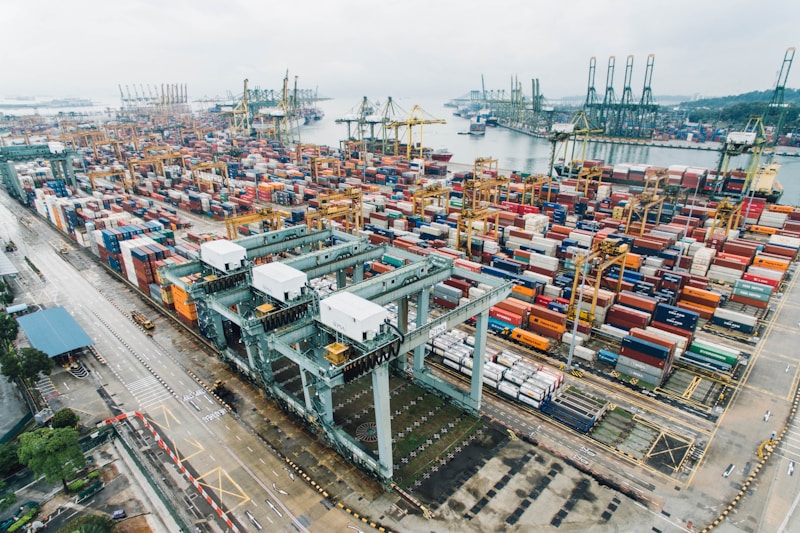
FCL LCL - SCM NextGen
Photo by 13582375 via Pixabay

The Hidden Complexity of Container Utilization and Demurrage Costs

The core challenge in ocean freight is not the transit time across the water; it is the friction at the edges of the journey. Most logistics professionals struggle with the "hidden costs" that accumulate when cargo is not moving. Demurrage and detention fees are the most common examples of this friction. Industry estimates suggest that these fees can sometimes exceed the original ocean freight rate if a shipment is held up at a congested port or if documentation is missing.

Organizations often fall into the trap of over-ordering or under-utilizing container space. Poor visibility into inventory levels leads to panicked LCL (Less than Container Load) bookings that cost three times as much per cubic meter as FCL (Full Container Load). Furthermore, a lack of coordination between the procurement team and the logistics provider often results in cargo arriving at the port before the customs broker has the necessary paperwork, triggering immediate storage charges.

A better approach involves integrated planning. By using platforms like Kinaxis or Blue Yonder, companies can align their production schedules with vessel sailings. This ensures that containers are stuffed to maximum capacity and that the documentation flow precedes the physical cargo. Mastering the "free time" window offered by carriers is a hallmark of a mature logistics operation.

❌ Common SCM Mistake✅ Smarter Approach
Optimise cost alone, ignore riskBalance cost, lead time, and supplier reliability together
Treat suppliers as adversariesBuild collaborative supplier partnerships for mutual benefit
Forecast based only on past salesIncorporate market signals, promotions, and external data
Hold excess safety stock "just in case"Use data-driven reorder points to right-size inventory
Measure delivery speed onlyTrack on-time-in-full (OTIF) and customer satisfaction together
Implement technology without process changeRedesign processes first, then select tools that fit

The Mechanics of the Port-to-Door Workflow

Understanding how ocean freight works in practice requires a clear view of the transition from the Container Yard (CY) to the final warehouse door. The process begins with the "Empty Pick-up," where a trucker collects a container from a carrier's depot. If the shipper is using FCL, the container is brought to their facility, loaded (stuffed), and sealed. For LCL, the goods are sent to a Container Freight Station (CFS) to be consolidated with other cargo.

The operational heart of the process is the Bill of Lading (BOL). This is not just a piece of paper; it is a legal contract and a document of title. If the BOL is "Original," the physical paper must be couriered to the destination for the cargo to be released. Many modern shippers now use "Telex Release" or "Express Release" to speed up this process, though this requires high levels of trust between the buyer and seller. Understanding these documentation types is vital for avoiding port delays.

Doing this correctly looks like a synchronized handoff. The drayage provider arrives at the port within the "Earliest Return Date" (ERD) window, the customs entry is filed 48 hours before the vessel berths, and the warehouse is ready for the "Devanning" process the moment the container clears the gate. When done wrong, containers sit on the dock, racking up daily fees while the sales team explains to customers why their orders are delayed. One key takeaway: the physical movement of the goods is only as fast as the digital movement of the data.

Ocean Freight Performance Benchmarks: Realistic Expectations

Setting honest, industry-accurate benchmarks is essential for managing stakeholder expectations. According to industry reports, global vessel schedule reliability typically fluctuates between 50% and 65%. This means that nearly half of all ships do not arrive on the day they were originally scheduled. Relying on a "Just-in-Time" (JIT) model for ocean freight without significant safety stock is a high-risk strategy.

Several variables affect these benchmarks, including port congestion, seasonal weather patterns, and carrier blank sailings (canceled voyages). For example, shipments on the Trans-Pacific Eastbound lane (Asia to US West Coast) often see different reliability metrics than those on the Asia-Europe lanes. Research from organizations like Gartner indicates that lead times should be calculated as "Port-to-Port" plus a minimum of 7-10 days for inland drayage and customs clearance.

Below-benchmark performance usually indicates a breakdown in carrier selection or a lack of "preferred shipper" status. If your shipments are consistently delayed more than the industry average, it may be time to renegotiate your Service Level Agreements (SLAs). One honest warning: many organizations fail to measure the "Total Landed Cost," ignoring the interest on capital tied up in inventory while it sits on the water for 40 days.

7 Steps to Executing a Seamless Ocean Freight Shipment

  1. Define Cargo Requirements and Mode Selection: Determine if your volume justifies an FCL (20ft, 40ft, or 40ft High Cube) or if LCL is more cost-effective. Use the SCOR framework to align this decision with your overall supply chain strategy.
  2. Select the Correct Incoterm: Choose an Incoterm (like FOB or CIF) that balances your control over the shipment with your risk tolerance. For beginners, FOB (Free On Board) is often the best balance, as it allows the buyer to control the ocean freight portion while the seller handles local export costs.
  3. Secure a Freight Booking: Use a platform like SAP Transportation Management or work with a Freight Forwarder to book space. Aim to book at least 3-4 weeks in advance during peak seasons to avoid "rolled" cargo.
  4. Prepare and Audit Documentation: Ensure the Commercial Invoice, Packing List, and Certificate of Origin are accurate. Errors in HS Codes (Harmonized System) are a leading cause of customs audits and fines.
  5. Coordinate Origin Drayage and Loading: Arrange for the container to be delivered to the loading site. Ensure the "Verified Gross Mass" (VGM) is recorded accurately, as required by SOLAS regulations; failure to do so will prevent the container from being loaded onto the ship.
  6. Monitor Transit and Manage Exceptions: Track the vessel's progress using AIS (Automatic Identification System) data. Be prepared to reroute or expedite inland transport if the ship is delayed at a transshipment hub.
  7. Execute Customs Clearance and Final Mile Delivery: File the manifest with customs before the ship arrives. Once cleared, coordinate the "Last Mile" drayage to the final destination and ensure the empty container is returned to the depot within the free-time window.

Your Ocean Freight Shipping Checklist

Before releasing any shipment to the port, use this checklist to ensure all operational safeguards are in place. This prevents the most common causes of detention and demurrage.

ActionTimeline
Verify HS Codes for all line items4 weeks before sailing
Confirm Incoterm responsibilities with supplierAt time of PO issuance
Submit Verified Gross Mass (VGM) to carrierBefore port gate-in
Review draft Bill of Lading for accuracy72 hours after vessel departure
Ensure ISF (10+2) filing for US-bound cargo24 hours before loading
Confirm "Free Time" agreement with forwarderAt time of booking
Audit final freight invoice against quoted ratesUpon receipt of cargo
🎬 Watch: Ocean Freight Logistics: Global Sea Shipping and Container Transport Guide
📌 Prefer watching over reading? This video walks through the key concepts — useful to follow alongside this guide.

How Different Organisation Types Approach Sea Freight

A mid-size manufacturer typically focuses on FCL shipments to maintain a steady flow of raw materials. Their approach is often centered on long-term contracts with 1-2 primary carriers to secure capacity during peak seasons. They rely heavily on ERP integrations, such as Oracle NetSuite, to trigger shipping requests automatically when inventory hits a reorder point.

In a retail distribution context, the focus shifts to "Speed to Market" and seasonality. These organizations often use a mix of FCL and LCL, utilizing Container Freight Stations (CFS) at the origin to consolidate products from multiple vendors into a single container. This "Buyer's Consolidation" strategy reduces the number of small shipments and lowers the total landed cost per unit.

For a 3PL provider, ocean freight is about managing a portfolio of clients. They act as a Non-Vessel Operating Common Carrier (NVOCC), leveraging their total volume to negotiate better rates with shipping lines like Maersk or MSC. Their value-add is in exception management—using advanced control towers to provide visibility to their clients when a vessel is delayed due to port strikes or weather events.

container types - SCM NextGen
Photo by Daria-Yakovleva via Pixabay
🗺️ Getting Started Roadmap

Building Your Ocean Freight Expertise

Phase 1 / Month 1: Focus on the fundamentals of Incoterms 2020 and container dimensions. Complete an introductory course on Coursera or LinkedIn Learning regarding international trade basics. Understand the difference between FOB, CIF, and EXW.

Phase 2 / Month 2: Master the documentation. Learn to read a Bill of Lading and a Commercial Invoice. Study the APICS CLTD (Certified in Logistics, Transportation and Distribution) materials, specifically the maritime transport modules.

Phase 3 / Month 3: Learn the financial side. Understand how Bunker Adjustment Factors (BAF), Currency Adjustment Factors (CAF), and Peak Season Surcharges (PSS) are calculated. Practice calculating the "Total Landed Cost" for a sample shipment.

Phase 4 / Month 4: Deepen your technical knowledge. Explore maritime regulations like IMO 2020 and the SOLAS VGM requirements. Consider pursuing the CIPS Level 4 Diploma for a broader view of procurement's role in logistics.

🔭 Industry Insight

The Green Shift in Maritime Trade

The ocean freight industry is undergoing its most significant transformation since the invention of the shipping container. By 2026, the maritime sector is heavily influenced by the International Maritime Organization (IMO) targets for decarbonization. We are seeing the rise of "Green Corridors"—specific trade lanes where zero-emission fuels and infrastructure are prioritized. Major carriers are now investing in methanol-ready vessels and ammonia-powered engines to meet these goals.

For supply chain professionals, this shift means that "Carbon Accounting" is no longer optional. The EU ETS (Emissions Trading System) now includes maritime emissions, adding a direct financial cost to carbon-heavy shipping routes. Many organizations are beginning to select carriers based on their "Carbon Intensity Indicator" (CII) rating. The practical implication is clear: in the near future, your shipping strategy will be judged not just on cost and speed, but on its environmental footprint. Start asking your forwarders for per-TEU carbon emissions data now to stay ahead of reporting requirements.

5 Ocean Freight Mistakes That Inflate Shipping Costs

  • Choosing the Wrong Container Size: Many shippers use a 40ft container when their cargo would fit in a 20ft, or vice versa. This leads to paying for "shipped air." Always calculate your CBM (Cubic Meters) before booking.
  • Ignoring Detention and Demurrage Free Time: Organizations often accept the standard 5-7 days of free time without realizing they can negotiate for 14 or 21 days. This lack of negotiation leads to massive daily fees when port congestion occurs.
  • Inaccurate Cargo Weight Declarations: Providing an incorrect VGM can lead to containers being rejected at the gate or, worse, causing accidents at sea. This results in re-weighing fees and missed vessel sailings.
  • Using EXW for International Sea Freight: Under EXW (Ex Works), the buyer is responsible for export customs in a foreign country—a task that is often legally and operationally difficult. This frequently leads to shipments being stuck at the origin.
  • Failing to Audit Freight Invoices: Industry reports suggest that a significant percentage of freight invoices contain errors in surcharges or exchange rates. Failing to audit these against the original quote is leaving money on the table.

Ocean Freight Tactics That Experienced Logistics Managers Use

  • ✔️ Request "Blanket" Rates for High-Volume Lanes: Instead of relying on the spot market, negotiate a fixed rate for 6-12 months. This provides budget stability, though you should include a clause to renegotiate if market rates drop significantly.
  • ✔️ Use "Buyer's Consolidation" for LCL: If you buy from multiple suppliers in the same region (e.g., Ningbo, China), have your forwarder consolidate these into one FCL. This reduces CFS handling fees and gives you more control over the transit.
  • ✔️ Implement a "Paperless" Documentation Workflow: Use electronic Bills of Lading (eBL) where possible. This eliminates the risk of lost documents and the cost of international couriers.
  • ✔️ When NOT to use Ocean Freight: Avoid sea freight for high-value electronics with short lifecycles or urgent medical supplies. The 30-40 day transit time can lead to obsolescence or stockouts that cost more than the savings in freight.
A quick win you can implement today is to request a "Demurrage and Detention" report from your current forwarder for the last six months. Identifying which ports or suppliers consistently trigger these fees allows you to adjust your lead times and documentation processes immediately.
bill of lading - SCM NextGen
Photo by jim5511 via Pixabay

Frequently Asked Questions

What is the difference between FCL and LCL in ocean freight?

FCL (Full Container Load) means one shipper uses an entire container, offering faster transit and lower risk of damage. LCL (Less than Container Load) involves multiple shippers sharing space in one container, which is cost-effective for smaller volumes but requires extra time for consolidation at a CFS.

How is demurrage different from detention in sea shipping?

Demurrage refers to fees charged by the shipping line when a full container stays in the port terminal beyond the allowed free days. Detention is charged when the importer keeps the empty container outside the port longer than the agreed timeframe after picking it up.

What does a Bill of Lading (BOL) serve as in logistics?

The Bill of Lading acts as a document of title, a contract of carriage between the shipper and the carrier, and a receipt for goods. It is the most critical document in ocean freight, required for the release of cargo at the destination.

How does IMO 2020 affect ocean freight costs?

IMO 2020 mandates a 0.5% limit on sulfur in fuel oil, forcing carriers to use more expensive Low Sulfur Fuel Oil (LSFO) or install scrubbers. These costs are often passed to shippers through Bunker Adjustment Factors (BAF) or environmental surcharges.

What is a TEU in container shipping?

TEU stands for Twenty-foot Equivalent Unit. It is a standard measure of container capacity based on the volume of a 20-foot long container. A standard 40-foot container is equal to two TEUs (or one FEU).

Which Incoterm is best for an importer with little logistics experience?

For inexperienced importers, CIF (Cost, Insurance, and Freight) or DAP (Delivered at Place) are often preferred as the seller manages most of the transit. However, this usually comes at a premium cost compared to managing logistics under FOB.

What is the role of a Container Freight Station (CFS)?

A CFS is a facility where LCL shipments are consolidated (stuffed) before export or de-consolidated (stripped) after import. It serves as the hub for managing shipments that do not fill an entire container.

What are Peak Season Surcharges (PSS)?

PSS are temporary fees added by carriers during periods of high demand, typically from July to October. These surcharges cover the operational strain of increased volumes before the holiday retail season.

A Practical Final Note

Ocean freight is often viewed as a slow and steady component of the supply chain, but as any experienced professional knows, it is where the most significant risks and rewards reside. The complexity of global maritime trade—from the nuances of Incoterms to the shifting landscape of environmental regulations—requires constant vigilance and a commitment to data-driven decision-making. You cannot manage what you do not measure, and in ocean freight, that means measuring every leg of the journey.

The most successful logistics managers are those who bridge the gap between procurement, operations, and their external partners. They don't just book a container; they manage a flow of information. As you apply the principles in this guide, focus first on your documentation accuracy and your container utilization. These are the two areas where you have the most direct control and where the quickest cost savings can be found.

Your next step is to audit your current ocean freight contracts. Look specifically at your agreed-upon free time and your landed cost calculations to ensure they reflect the realities of 2026.

References & Sources

📚References & Sources6 SOURCES
  1. 1Association for Supply Chain Management. (2024). ASCM Dictionary, 17th Edition. ASCM.
  2. 2Gartner. (2023, November 15). Magic Quadrant for Global Freight Forwarding. Retrieved from https://www.gartner.com
  3. 3McKinsey & Company. (2024). The future of container shipping: Navigating volatility. McKinsey Operations Practice.
  4. 4International Maritime Organization. (2020). IMO 2020: Cutting sulphur oxide emissions. IMO Publications.
  5. 5World Bank. (2023). The Logistics Performance Index: Connecting to Compete. World Bank Group.
  6. 6Coyle, J. J., Langley, C. J., Novack, R. A., & Gibson, B. (2021). Supply Chain Management: A Logistics Perspective. Cengage Learning.

ℹ️References reflect publicly available industry research and reporting. Verify specific figures or report titles against the original publisher before citing elsewhere.

🚚

Logistics Experts — Tell Us What Works!

What's made the biggest difference in your transportation or fulfillment operations? Share it below — your insight could help someone optimizing their network right now.

Md Faysal Hossain
✍️ Md Faysal Hossain
SCM NextGen · Supply Chain Experts
SCM NextGen is written by supply chain management professionals and educators with real-world experience in logistics, procurement, warehousing, and operations. Our goal is to make SCM concepts practical — whether you are a student preparing for a certification, a buyer managing suppliers, or an operations manager looking for smarter strategies.
⚠️ DisclaimerThe information in this post is intended for educational purposes in the field of supply chain management. While we strive for accuracy, supply chain practices, regulations, and technologies evolve rapidly. Always verify specific figures, standards, or compliance requirements with authoritative industry sources such as APICS, CIPS, or your organisation's legal and operations advisors. SCM NextGen does not accept liability for decisions made based on this content.

Popular Posts