Update

Showing posts with label Contract & Global Sourcing. Show all posts

Monday, July 13, 2026

July 13, 2026

Tariffs and Trade Compliance Guide for Global Procurement 2024

Strategic Tariff Management: A Guide to Global Trade Compliance for Procurement Professionals

This guide provides the operational framework needed to navigate complex customs regulations, classify goods accurately using HS codes, and leverage Free Trade Agreements to protect profit margins.

📅 Updated July 2026 · ✍️ Md Faysal Hossain

The High Stakes of Global Trade Compliance

A 3% error in tariff classification can wipe out the entire cost-saving benefit of a multi-million dollar global sourcing contract. This is the reality I see in today's procurement landscape. Many teams spend months negotiating unit prices with suppliers, only to lose those gains at the border because they treated trade compliance as an administrative afterthought rather than a strategic pillar.

Tariffs are no longer static figures tucked away in a spreadsheet. They are dynamic tools of geopolitics. For the supply chain professional, this means that understanding the Harmonized System (HS) and the nuances of Customs Valuation is just as critical as understanding lead times or supplier quality. If you cannot predict your landed cost with 99% accuracy, your procurement strategy is essentially a gamble.

As Md Faysal Hossain, I have observed that the most resilient supply chains are those that integrate compliance directly into the sourcing lifecycle. We are moving away from a world of 'free trade' toward a world of 'managed trade,' where compliance is the gatekeeper of profitability. This guide covers the essential mechanics of tariffs, HS codes, and global sourcing laws to help you navigate this complexity.

HS codes - SCM NextGen
Photo by Boskampi via Pixabay

Why Misclassification and Compliance Gaps Paralyze Global Sourcing

The core challenge in global procurement is the 'Classification Gap.' Organizations often rely on suppliers to provide HS codes, assuming the manufacturer knows best. However, the legal responsibility for accurate classification almost always rests with the Importer of Record (IOR). When a supplier provides a generic code to expedite shipping, they are not the ones who will face a Customs and Border Protection (CBP) audit three years later.

Organizations fall into this trap because trade compliance is often siloed in the logistics or legal department, far removed from the initial sourcing decision. When procurement officers select a vendor based on a 'Free on Board' (FOB) price without accounting for Section 301 China tariffs or Anti-Dumping duties, the resulting budget variance can be catastrophic. The 'better approach' involves a cross-functional Total Landed Cost (TLC) model that triggers a compliance review before the contract is even signed.

When compliance is ignored, the results are predictable: unexpected duty bills, shipments held at the port, and the 'Blacklist' effect. Customs authorities use risk-based targeting. Once a company is flagged for a major misclassification, every subsequent shipment faces a higher probability of inspection, leading to chronic delays and increased demurrage costs.

❌ Common SCM Mistake✅ Smarter Approach
Optimise cost alone, ignore riskBalance cost, lead time, and supplier reliability together
Treat suppliers as adversariesBuild collaborative supplier partnerships for mutual benefit
Forecast based only on past salesIncorporate market signals, promotions, and external data
Hold excess safety stock "just in case"Use data-driven reorder points to right-size inventory
Measure delivery speed onlyTrack on-time-in-full (OTIF) and customer satisfaction together
Implement technology without process changeRedesign processes first, then select tools that fit

How HS Codes and Customs Valuation Drive Landed Cost Accuracy

Understanding the mechanism of the Harmonized System is the first step toward operational control. The HS is a hierarchical structure. The first six digits are universal across 212 countries and territories. However, the remaining digits (up to 10 or 12) are determined by individual nations. A common operational error is using a 10-digit code from a European supplier for a U.S. import. Only the first six digits are transferable; the rest must be localized to the destination country's tariff schedule.

Customs Valuation is the second pillar. Most procurement professionals understand the 'Transaction Value Method'—the price paid to the supplier. But many overlook 'Assists.' If your company provides the supplier with free molds, dies, or even engineering designs to produce the goods, the value of those items must be prorated and added to the customs value. Failure to declare assists is a leading cause of 'undervaluation' penalties during audits.

Doing this correctly looks like a 'Compliance-First' sourcing flow. Before a purchase order is issued in a system like SAP or Oracle, the item master must be populated with a verified HS code and a Country of Origin (COO) determination. This allows the ERP to automatically calculate the estimated duty, providing the procurement manager with a true landed cost. Doing it wrong looks like a logistics coordinator frantically trying to classify 500 SKUs on a Friday afternoon while the container is already on the water.

Trade Compliance Performance: What Best-in-Class Accuracy Looks Like

Industry reports suggest that best-in-class procurement organizations maintain an HS classification accuracy rate of over 98%. This isn't just about avoiding fines; it's about financial predictability. According to research from industry bodies like CIPS, companies with high compliance maturity experience 30% fewer customs-related delays compared to their peers.

Several variables affect these benchmarks. High-tech electronics and chemicals face much higher scrutiny due to dual-use regulations and complex chemical compositions. For these sectors, 'good' performance often requires a dedicated trade compliance officer or the use of automated classification software like Thomson Reuters ONESOURCE or E2open. Many organizations find that their biggest hurdle isn't the law itself, but the quality of their own master data.

A realistic warning: many companies over-rely on 'Incoterms' to manage risk. While Incoterms define who pays for the freight and who bears the risk of loss, they do not absolve the Importer of Record from legal compliance. Even if you buy 'DDP' (Delivered Duty Paid), your company's name is often on the customs entry, and you remain liable for the accuracy of the data submitted by the seller's broker.

7 Steps to Building a Compliant Global Procurement Workflow

  1. Establish the Importer of Record (IOR) Responsibility: Clearly define who in the organization is legally responsible for customs entries. This person must have the authority to halt shipments that do not meet compliance standards.
  2. Standardize HS Classification Processes: Do not let suppliers choose your codes. Use a centralized database or a tool like 3CE to classify goods based on the General Rules of Interpretation (GRIs). For high-value items, consider applying for a Binding Tariff Ruling from customs authorities to get a legal guarantee of the rate.
  3. Conduct a Rules of Origin (ROO) Analysis: To claim Free Trade Agreement (FTA) benefits (like USMCA or CPTPP), you must prove the goods meet specific 'Regional Value Content' or 'Tariff Shift' requirements. Simply shipping from a member country is not enough; the 'substantial transformation' must happen there.
  4. Implement a Customs Valuation Audit: Review your supply contracts for 'Assists,' royalties, or subsequent proceeds. Ensure these are communicated to your customs broker so they are included in the 'Price Actually Paid or Payable' (PAPP).
  5. Screen for Trade Remedies and Sanctions: Check if your products fall under Section 301 (China), Section 232 (Steel/Aluminum), or Anti-Dumping duties. Reference the 'Consolidated Screening List' to ensure you are not sourcing from sanctioned entities.
  6. Formalize Broker Management: Your customs broker is an agent, not a shield. Implement a 'Broker Power of Attorney' (POA) and conduct monthly audits of a random sample of entries (Form 7501 in the U.S.) to check for errors in value, quantity, or classification.
  7. Integrate Compliance into the ERP: Use platforms like Gartner-rated Global Trade Management (GTM) systems to automate the flow of compliance data. This ensures that the procurement team sees the duty impact in real-time during the sourcing phase.

The Procurement Compliance Action Checklist

Effective trade compliance requires a systematic approach to data verification and supplier communication. Use this checklist to audit your current global sourcing files.

ActionTimeline
Verify 6-digit HS codes for top 80% of spend by valueQuarterly
Collect signed Certificates of Origin for all FTA-eligible goodsPer Shipment
Audit customs broker entries against original commercial invoicesMonthly
Review 'Assists' (molds/tools) provided to offshore vendorsAnnually
Screen all new suppliers against the Restricted Party ListPre-contract
Update landed cost models with current Section 301 exclusionsBi-annually
Verify 'Substantial Transformation' for multi-country manufacturingPer SKU Change
🎬 Watch: Tariffs and Trade Compliance: Navigating Global Procurement Laws
📌 Prefer watching over reading? This video walks through the key concepts — useful to follow alongside this guide.

How Different Organisation Types Approach This in Practice

A mid-size electronics manufacturer typically faces the highest complexity. They may source components from ten different countries, assemble them in a eleventh, and sell in a twelfth. In this context, the focus is on 'Tariff Engineering'—designing the product or its assembly process to ensure it qualifies for a specific FTA or avoids a high-duty classification. They rely heavily on 'De Minimis' rules and 'Value Content' calculations to optimize their tax exposure.

In a retail distribution context, the volume of SKUs is the primary hurdle. A fashion retailer might import 5,000 different styles per season. They cannot manually classify each one. Instead, they use AI-driven classification engines that scan product descriptions and images to suggest HS codes. Their risk management focuses on 'Country of Origin' labeling, as mislabeling a garment's origin can lead to massive consumer class-action lawsuits in addition to customs fines.

For a 3PL provider acting as a lead logistics provider (LLP), the challenge is data orchestration. They must act as the bridge between the manufacturer's ERP and the customs broker's system. They focus on 'Data Integrity,' ensuring that the weights, measures, and values on the Bill of Lading match the Commercial Invoice exactly. For them, a single discrepancy is a 'Red Flag' that triggers a manual hold to prevent a non-compliant filing.

customs duty - SCM NextGen
Photo by bahonya via Pixabay
🔭 Industry Insight

The Shift Toward 'Digital Customs' and Real-Time Compliance

As we move into 2025 and 2026, the traditional 'post-entry audit' is being replaced by real-time data sharing between importers and governments. Initiatives like the WTO's Trade Facilitation Agreement (TFA) are pushing customs authorities to adopt 'Single Window' systems. This means your procurement data must be cleaner than ever. Governments are increasingly using AI to spot anomalies in pricing—if your declared value for a widget is 40% lower than the industry average, an automated 'Request for Information' (CF-28 in the U.S.) will be triggered instantly. The practical implication for you: trade compliance must move 'upstream' into the procurement process. You can no longer fix data errors at the border; the data must be born correct in your sourcing system.

📂 Industry Case Study

Apple’s Diversification Strategy and Tariff Mitigation

According to industry reports from Reuters and Bloomberg, Apple has significantly accelerated its 'China Plus One' strategy over the last three years. This wasn't just about labor costs; it was a direct response to Section 301 tariffs and trade compliance risks. By shifting a portion of iPhone production to Foxconn facilities in India and moving iPad production to Vietnam, Apple successfully changed the 'Country of Origin' for millions of units. This move demonstrates that in modern SCM, the 'Country of Origin' is a strategic variable that can be moved to optimize the global tax footprint. However, Apple had to ensure that these new facilities performed enough 'substantial transformation' to satisfy customs authorities that the goods were no longer 'Chinese-origin' despite using many Chinese-made components. This highlights the critical role of Rules of Origin (ROO) in large-scale procurement shifts.

5 Trade Compliance Mistakes That Lead to Audits and Fines

  • Relying on Supplier HS Codes: Suppliers often use 'basket' codes (ending in .99) to save time. These are audit magnets. Always perform your own classification.
  • Ignoring 'Assists' in Valuation: Failing to declare the value of company-owned tooling located at a supplier's factory is a common form of inadvertent tax evasion.
  • Assuming 'Made in' means 'Origin of': A product may be 'Made in Vietnam' but if it's just assembled from 100% Chinese parts with no significant transformation, customs may still consider it Chinese-origin for tariff purposes.
  • Using Outdated FTA Certificates: Certificates of Origin expire. Using an old one for a new shipment is a compliance violation that results in immediate duty clawbacks.
  • Treating DDP as 'Compliance-Free': Even if the seller pays the duty, the buyer is often the one whose reputation is at risk with local authorities. Always audit DDP shipments.

Procurement Tactics That Experienced Category Managers Actually Use

  • ✔️ Use 'Informed Compliance' Letters: When negotiating with a new global supplier, send a formal letter outlining your requirements for HS codes, COO documentation, and valuation. This creates a paper trail of 'Reasonable Care.'
  • ✔️ Leverage Duty Drawback: If you import goods, pay duty, and then re-export them (or use them to manufacture an exported product), you can often claim a 99% refund of the original duties paid.
  • ✔️ Apply for 'First Sale' Valuation: In multi-tier supply chains, you may be able to base customs value on the price the manufacturer charged the middleman, rather than the price you paid the middleman. When not to use it: Avoid this if your supply chain is simple or if the administrative cost of proving the 'First Sale' exceeds the duty savings.

Conduct a 'Post-Entry Audit' on 5% of your shipments this month. Compare the commercial invoice to the actual customs filing (Form 7501 or equivalent) to ensure your broker didn't make a manual data entry error.
Tariffs and Trade Compliance: Navigating Global Procurement Laws - SCM NextGen
SCM NextGen — Supply Chain Management Guide

Frequently Asked Questions

What is the difference between an HS Code and an HTSUS Code?

The HS Code is a 6-digit universal standard maintained by the World Customs Organization (WCO). The HTSUS (Harmonized Tariff Schedule of the United States) is a 10-digit system where the first 6 digits match the HS code, but the final 4 digits are specific to U.S. duty rates and statistical reporting.

How does the Transaction Value Method work in customs valuation?

It is the primary method of appraisal, defined as the price actually paid or payable for the goods when sold for export to the country of importation. It must include certain adjustments like packing costs, selling commissions, and 'assists' provided by the buyer.

What does the WTO 'Most-Favored-Nation' (MFN) principle mean for procurement?

The MFN principle prevents WTO members from discriminating between their trading partners. If a country lowers a tariff for one member, it must typically lower it for all members, unless a specific Free Trade Agreement (FTA) or preferential trade program is in place.

Can a product have multiple countries of origin?

Legally, a product has only one Country of Origin (COO) for customs purposes. If components come from multiple countries, the COO is usually where the 'substantial transformation' occurred—the process resulting in a new name, character, or use.

What are Section 301 tariffs?

Section 301 refers to the U.S. Trade Act of 1974, which allows the U.S. to impose trade sanctions on countries that engage in unfair trade practices. Currently, it most notably applies to a wide range of goods imported from China, significantly impacting landed costs.

How do I prove eligibility for an FTA?

Eligibility is proven through a Certificate of Origin or specific supporting documentation that demonstrates the goods meet the 'Rules of Origin' defined in that specific treaty, such as a regional value content (RVC) threshold.

What is 'Tariff Engineering'?

Tariff engineering is the legal practice of designing or modifying a product so that it falls under a lower-duty HS classification. It is distinct from tax evasion, as it involves genuine physical or functional attributes of the product prior to importation.

What are the penalties for misclassifying imports?

Penalties vary by jurisdiction but often include heavy fines, seizure of goods, loss of import privileges, and retroactive duty payments plus interest. In cases of 'gross negligence' or 'fraud,' criminal charges can be brought against company officers.

The Part Most Guides Skip

Most trade compliance guides focus on the 'what'—the laws and the codes. But the 'how' is where most procurement professionals fail. Compliance is not a one-time setup; it is a continuous data integrity challenge. The most successful SCM leaders I know treat their customs broker like a strategic partner, meeting with them monthly to review 'Red Flags' and upcoming regulatory changes.

As Md Faysal Hossain, I recommend that you stop viewing tariffs as a 'tax' and start viewing them as a 'risk variable' in your supply chain design. The goal is not just to pay the lowest duty, but to have the most defensible position when an auditor eventually knocks on your door. Compliance is the foundation upon which global sourcing resilience is built.

Identify your top three highest-spend imported SKUs today and verify their HS codes against the latest national tariff schedule. If you find a discrepancy, fix it before your next shipment leaves the port.

References & Sources

📚References & Sources6 SOURCES
  1. 1Association for Supply Chain Management. (2023). ASCM Supply Chain Dictionary (17th ed.). ASCM.
  2. 2Chartered Institute of Procurement & Supply. (2022). Global Sourcing and International Trade. CIPS Knowledge Works.
  3. 3Gartner. (2023, November 15). Predicts 2024: Supply Chain Strategy and Global Trade. Gartner Research.
  4. 4McKinsey & Company. (2021, July). Risk, resilience, and rebalancing in global value chains. McKinsey Global Institute.
  5. 5World Trade Organization. (2023). World Trade Report 2023: Re-globalization for a resilient, inclusive and sustainable future. WTO Secretariat.
  6. 6U.S. Customs and Border Protection. (2020). Mitigation of Section 301 Duties: A Guide for Importers. CBP.gov.

ℹ️References reflect publicly available industry research and reporting. Verify specific figures or report titles against the original publisher before citing elsewhere.

🤝

Procurement Pros — Share Your Insights!

Which sourcing or supplier-management approach has actually worked for you? Drop your experience below — it could help a procurement student or new buyer avoid a costly mistake.

Md Faysal Hossain
✍️ Md Faysal Hossain
SCM NextGen · Supply Chain Experts
SCM NextGen is written by supply chain management professionals and educators with real-world experience in logistics, procurement, warehousing, and operations. Our goal is to make SCM concepts practical — whether you are a student preparing for a certification, a buyer managing suppliers, or an operations manager looking for smarter strategies.
⚠️ DisclaimerThe information in this post is intended for educational purposes in the field of supply chain management. While we strive for accuracy, supply chain practices, regulations, and technologies evolve rapidly. Always verify specific figures, standards, or compliance requirements with authoritative industry sources such as APICS, CIPS, or your organisation's legal and operations advisors. SCM NextGen does not accept liability for decisions made based on this content.
July 13, 2026

Incoterms 2020 for Procurement: Global Sourcing Guide

Mastering Incoterms 2020 for Strategic Global Procurement

This guide provides a professional breakdown of the 11 Incoterms 2020 rules, enabling procurement managers to allocate risk, manage logistics costs, and avoid contractual disputes in international sourcing.

📅 Updated July 2026 · ✍️ Md Faysal Hossain

The Real Cost of Incoterm Mismanagement

A single misinterpreted three-letter acronym in a procurement contract can wipe out a year’s worth of margin on a global shipment. I have seen logistics managers scramble when a container is damaged at a transshipment hub, only to realize their purchase order used an Incoterm that left them liable for the loss before the goods even reached the ocean. In international procurement, the difference between a profitable quarter and a massive logistics write-off often comes down to how well you define the transfer of risk.

Many procurement professionals treat Incoterms as a formality or a box to tick on a purchase order. This is a dangerous simplification. Incoterms (International Commercial Terms) are the universal language of global trade, but they are not self-executing laws. They are contractual shorthand used to define where the seller's responsibility ends and the buyer's begins. Without a precise understanding of these rules, you are essentially gambling with your landed cost and supply chain resilience.

Research from industry bodies suggests that nearly 30% of international trade disputes stem from poorly defined delivery terms. These disputes are rarely about the product quality itself; they are about who pays for the unexpected demurrage at the port, who handles the insurance claim when a vessel is delayed, and who is responsible for the complex paperwork of import clearance. As global sourcing becomes more volatile, precision in these terms is no longer optional.

This guide covers the operational nuances of all 11 Incoterms 2020 rules, the strategic trade-offs between different groups, and a step-by-step framework for choosing the right term for your specific supply chain model.

FOB vs CIF - SCM NextGen
Photo by HOerwin56 via Pixabay

The Risk and Cost Disconnect in Global Sourcing

The most significant challenge in procurement is the mental trap of assuming that 'paying for freight' is the same as 'owning the risk.' In the world of Incoterms, cost and risk frequently transfer at different points. This is particularly true for the 'C' group terms (CFR, CIF, CPT, CIP), which are staples in global sourcing. In these scenarios, the seller pays for the freight to the destination port, but the risk transfers to the buyer the moment the goods are loaded onto the carrier at the origin.

Organizations often fall into the trap of using maritime-only terms like FOB (Free on Board) for containerized cargo. FOB was designed for bulk commodities where the goods are placed directly on the vessel. For modern containerized shipping, where goods are delivered to a carrier at a terminal (CY/CFS), FCA (Free Carrier) is the technically correct and safer term. Using the wrong term creates a 'grey zone' of liability between the terminal and the ship’s rail—a gap where many insurance claims are denied.

When this disconnect isn't managed, the buyer might assume the seller is responsible for the goods until they arrive at the destination port. If a container is lost at sea under CPT or CFR terms, the buyer is still legally obligated to pay the seller, even though the goods never arrived. The buyer must then pursue the insurance claim themselves. This operational reality often catches procurement teams off guard, leading to significant cash flow disruptions and strained supplier relationships.

A better approach involves aligning the Incoterm with the organization's internal logistics capabilities. If you have a strong relationship with a global 3PL like DHL or Kuehne+Nagel, you likely want more control over the freight (using 'F' terms). If you are a small business with limited logistics staff, you might prefer the seller to handle the complexity (using 'D' terms), provided you understand the premium you are paying for that convenience.

❌ Common SCM Mistake✅ Smarter Approach
Optimise cost alone, ignore riskBalance cost, lead time, and supplier reliability together
Treat suppliers as adversariesBuild collaborative supplier partnerships for mutual benefit
Forecast based only on past salesIncorporate market signals, promotions, and external data
Hold excess safety stock "just in case"Use data-driven reorder points to right-size inventory
Measure delivery speed onlyTrack on-time-in-full (OTIF) and customer satisfaction together
Implement technology without process changeRedesign processes first, then select tools that fit

How Incoterms Function in Modern Sourcing Contracts

In practice, Incoterms act as a bridge between the commercial contract and the physical movement of goods. They provide a standardized framework that allows a buyer in Chicago and a seller in Shanghai to have an identical understanding of their obligations without needing a 50-page logistics manual for every transaction. Understanding the mechanism of these terms is vital for accurate Total Cost of Ownership (TCO) calculations.

Take the 2020 update to FCA (Free Carrier) as an operational example. In previous versions, sellers often struggled with 'F' terms because they needed a Bill of Lading (BL) with an 'on-board' notation to get paid via a Letter of Credit. However, the carrier wouldn't issue the BL until the goods were actually on the ship, which happens after the FCA delivery point. The 2020 rules now allow the buyer and seller to agree that the buyer will instruct the carrier to issue the on-board BL to the seller, solving a major friction point in trade finance.

Doing this correctly means specifying the 'named place' with extreme detail. Writing 'FCA Shanghai' is insufficient. A professional contract will state 'FCA [Seller's Warehouse Address], Shanghai, Incoterms 2020.' This precision eliminates arguments over who pays for the drayage from the warehouse to the port. If you leave the location vague, a supplier might deliver to the cheapest, most congested terminal, leaving you with higher handling fees and longer lead times.

Conversely, doing this wrong looks like using DDP (Delivered Duty Paid) for every shipment because it 'seems easier.' For an international seller, DDP is a nightmare of local tax compliance and customs regulations. If the seller fails to clear customs because they don't have a local tax ID, your goods will sit in bonded storage, accruing daily demurrage charges that can quickly exceed the value of the cargo. The key takeaway is that Incoterms are a tool for risk allocation, not a way to ignore the realities of international logistics.

Logistics Performance: Realistic Expectations in International Trade

Setting realistic benchmarks for international shipments requires an understanding of how Incoterms influence lead times and costs. Industry reports suggest that shipments moved under 'D' terms (Delivered) often have 10-15% longer total lead times than those managed by the buyer under 'F' terms. This is because the seller, responsible for the cost, will naturally prioritize the cheapest shipping lanes and carriers, which are rarely the fastest.

Inventory accuracy and visibility also fluctuate based on the chosen term. Organizations using ASCM frameworks often find that 'FCA' and 'EXW' terms provide the highest level of visibility because the buyer’s own freight forwarder controls the data from the point of origin. When the seller controls the freight (C and D terms), visibility is often a 'black box' until the goods arrive at the destination port, making it difficult to manage safety stock levels effectively.

Research from Gartner indicates that many organizations underestimate the cost of 'hidden' logistics fees. For example, under CIF terms, the seller pays for the insurance, but under Incoterms 2020, they are only required to provide minimum coverage (Institute Cargo Clauses C). If you are shipping high-value electronics, this benchmark level of insurance is woefully inadequate. A below-benchmark performance in risk management usually indicates a failure to negotiate 'All Risk' (Clause A) coverage in the contract.

One honest warning regarding performance measurement: do not judge your procurement team solely on the 'freight cost' per unit. A low freight cost achieved through DDP terms often hides a much higher unit price from the supplier, who adds a significant buffer to cover their own risk and administrative overhead. True performance must be measured through landed cost audits.

A Strategic Process for Selecting the Right Incoterm

Choosing an Incoterm should be a deliberate strategic decision, not a default setting in your ERP system like SAP or Oracle. Follow these steps to align your terms with your operational goals:

  1. Analyze Your Logistics Maturity: Determine if your organization has the volume and expertise to negotiate better freight rates than your supplier. If you ship thousands of containers annually, you should likely use FCA or FOB to leverage your global freight spend. If you are a low-volume buyer, the supplier's rates under CPT or CFR may be more competitive.
  2. Determine the Point of Risk Transfer: Map out your supply chain's 'danger zones.' If you are sourcing from a region with high port congestion or political instability, you may want the seller to bear the risk as long as possible (using D-terms). If you have high confidence in your 3PL’s ability to manage transit, transferring risk at the origin (F-terms) gives you more control.
  3. Verify Customs and Tax Compliance: Evaluate the complexity of import/export regulations in both countries. Avoid DDP unless your seller has a proven track record of clearing customs in your specific jurisdiction. Use DAP (Delivered at Place) if you want the seller to handle the transport but you want to maintain control over the customs clearance and duty payments.
  4. Specify Insurance Requirements: Under Incoterms 2020, CIP requires the seller to obtain high-level 'All Risk' insurance. If you are using CIF (maritime only), the requirement is still the lower 'Clause C' level. If your cargo is fragile or high-value, explicitly mandate 'Clause A' insurance regardless of the Incoterm used.
  5. Define the Named Place with Precision: Use GPS coordinates or full street addresses for the delivery point. In large ports like Rotterdam or Singapore, specifying the exact terminal can save hundreds of dollars in local shunting fees and prevent delivery to the wrong carrier.

Global Sourcing Incoterm Checklist

Use this checklist during the contract negotiation phase to ensure all logistics bases are covered. This ensures alignment between procurement, finance, and operations teams.

ActionTimeline
Verify if the chosen Incoterm matches the transport mode (Sea vs. Multi).Pre-Contract
Confirm the seller's ability to provide an 'on-board' BL for FCA terms.During Negotiation
Audit the supplier's insurance policy against ICC Clause A requirements.Weekly
Input the exact named place into the ERP system (e.g., NetSuite).Order Entry
Review local VAT/GST implications for any DDP shipments.Monthly Audit
Update the 'Standard Operating Procedure' for the freight forwarder.Quarterly
Cross-reference Incoterm risk transfer with the revenue recognition policy.Annual Review

🎬 Watch: Incoterms 2020 Explained: Complete Guide for International Procurement
📌 Prefer watching over reading? This video walks through the key concepts — useful to follow alongside this guide.

Operational Scenarios: Incoterms in Action

In a retail distribution context, a large fast-fashion company might prefer FCA. By taking control of the goods at the factory gate in Vietnam, they can consolidate shipments from multiple suppliers into a single container. This 'buyer-led' consolidation reduces ocean freight costs and allows the retailer to use their preferred 3PL visibility platform to track inventory before it even leaves the country.

For a manufacturer of heavy industrial machinery, DAP (Delivered at Place) is often more appropriate. These shipments are oversized and require specialized handling. The manufacturer (seller) has the expertise to secure the cargo and manage the complex inland transport in the destination country. The buyer still handles the import customs clearance, ensuring they maintain control over duty exemptions and regulatory compliance.

A mid-size electronics distributor sourcing from a new supplier might opt for CIP (Carriage and Insurance Paid To). This provides a balance: the seller manages the logistics to the distributor's hub, but the Incoterms 2020 rules mandate that the seller provide comprehensive 'All Risk' insurance. This protects the distributor's investment during the long transit period without requiring them to manage a foreign logistics network immediately.

Incoterms 2020 Explained: Complete Guide for International Procurement - SCM NextGen
SCM NextGen — Supply Chain Management Guide
🛠️ Tool & Technology Review

Platforms for Managing Incoterm Compliance

  • Infor Nexus: A leading multi-enterprise supply chain network. It excels at providing visibility for 'F' and 'C' terms, allowing buyers to track milestones from the moment risk transfers at the origin. Best for large enterprises with complex global sourcing.
  • Freightos: An excellent benchmarking tool for procurement officers. It allows you to compare the cost of 'Ex-Works' (EXW) pickup versus 'Free on Board' (FOB) or 'Cost and Freight' (CFR) quotes from suppliers. Best for SMEs looking for market-rate transparency.
  • SAP Ariba: A procurement powerhouse that allows for the standardization of Incoterms across all global contracts. It ensures that 'Named Places' are formatted correctly, reducing the risk of clerical errors in purchase orders. Best for large-scale procurement automation.
🗺️ Getting Started Roadmap

Building Expertise in Global Sourcing Terms

Phase 1 / Month 1: Obtain the official 'Incoterms 2020' rulebook from the International Chamber of Commerce (ICC). Avoid relying on free online summaries which often miss the legal nuances of insurance and terminal handling. Phase 2 / Month 2: Enroll in a specialized course through CIPS or the ICC Academy. Focus specifically on the transition from maritime-only terms to multimodal terms. Phase 3 / Month 4: Conduct a 'Landed Cost Audit' of your current top 10 shipments. Calculate the actual cost of insurance, freight, and duties to see if your current Incoterms are truly the most cost-effective. Phase 4 / Month 6: Pursue an APICS certification (like CSCP or CLTD) to understand how Incoterms integrate into broader supply chain strategy and inventory management.

5 Critical Incoterm Errors That Drain Procurement Budgets

Confusing Incoterms with Title Transfer: Many professionals believe that when risk transfers, ownership transfers. This is false. Ownership is governed by the 'Law of the Contract.' If your contract doesn't specify when the title passes, you could face legal nightmares during a supplier bankruptcy.

Using EXW for International Exports: Under Ex-Works, the buyer is responsible for export clearance. In many countries, a foreign buyer cannot legally clear exports without a local entity. This leads to goods being stuck at the gate and the buyer paying for the seller's administrative failures.

Ignoring the 'Unloaded' Requirement in DPU: DPU (Delivered at Place Unloaded) is the only term that requires the seller to unload the goods. If you use DPU but don't provide the seller with access to a loading dock or crane, you will be liable for the carrier's waiting time and potential return freight.

Using FOB for Containerized Cargo: As mentioned, FOB risk transfers at the ship's rail. If a container is damaged while being moved by a reach stacker at the terminal, it is unclear who bears the risk. Use FCA instead to ensure the risk transfers when the carrier takes possession.

Defaulting to DDP for Small Shipments: While DDP seems convenient for air freight or samples, the seller often bakes a 20-30% 'hassle premium' into the price. Managing these through your own courier account (using FCA) is almost always cheaper and provides better tracking.

Advanced Tactics for Experienced Category Managers

✔️ Negotiate 'Clause A' Insurance for CIF: While the 2020 rules only require 'Clause C' for CIF, you should always negotiate for 'Clause A' (All Risk) in your purchase agreement. The cost difference is usually negligible, but the coverage difference is massive. When not to use it: If you are shipping low-value, non-perishable bulk commodities like scrap metal where the cost of 'All Risk' insurance exceeds the potential loss value.

✔️ Use 'FCA Seller's Premises' to Control the First Mile: By choosing FCA at the supplier's warehouse, you gain control over the drayage. This allows you to select a carrier that meets your sustainability or security standards, rather than leaving it to the supplier's cheapest option.

✔️ Audit Terminal Handling Charges (THC): In 'C' terms, the seller pays for the freight to the port, but the buyer often gets hit with unexpected THC at the destination. Explicitly state in the contract that 'Destination THC' is for the seller’s account to avoid these 'hidden' port fees.

Review your current 'Ex-Works' contracts today. If your supplier is actually loading the truck at their warehouse, you should be using 'FCA Seller's Premises' to legally protect yourself from liability during the loading process.
incoterms comparison table - SCM NextGen
Photo by JoelFazhari via Pixabay

Frequently Asked Questions

Do Incoterms 2020 determine when ownership of goods transfers?

No, Incoterms only define the delivery point, risk transfer, and cost allocation. Property rights and the transfer of title must be explicitly defined in the separate contract of sale.

What is the main difference between Incoterms 2010 and 2020?

The 2020 rules renamed DAT to DPU (Delivered at Place Unloaded), increased insurance requirements for CIP to 'All Risk' coverage, and modified FCA to allow for on-board bills of lading.

Why is DDP considered risky for international sellers?

Under Delivered Duty Paid, the seller is responsible for import clearance and taxes in a foreign country. This is often difficult to execute without a local legal entity or a highly capable customs broker.

Which Incoterms are strictly for sea and inland waterway transport?

FAS (Free Alongside Ship), FOB (Free on Board), CFR (Cost and Freight), and CIF (Cost, Insurance, and Freight) are reserved for maritime transport where the goods are delivered on a vessel.

Can I still use Incoterms 2010 in my current contracts?

Yes, but you must clearly state 'Incoterms 2010' in the contract. However, industry best practice is to transition to Incoterms 2020 to align with modern logistics and insurance standards.

What does 'Named Place' refer to in an Incoterm?

The named place is the specific location (e.g., a port, warehouse, or border crossing) where the cost or risk transfer occurs. Vague naming often leads to disputes over terminal handling charges.

Who pays for the 'main carriage' in C-terms like CFR or CPT?

The seller is responsible for contracting and paying for the main carriage to the named destination, even though the risk transfers to the buyer once the goods are loaded.

Is insurance mandatory for all Incoterms?

Insurance is only contractually mandated under CIF and CIP. For all other terms, the party bearing the risk usually chooses to buy insurance, but it is not a requirement of the Incoterm itself.

One Thought Before You Apply This

The most important thing to remember is that Incoterms are a tool for communication, not a substitute for a good relationship with your freight forwarder. Even the most perfectly drafted Incoterm cannot save a shipment if your carrier is unreliable or your documentation is inaccurate. As you move forward, treat Incoterms as one part of a broader 'Global Sourcing Framework' that includes quality audits, lead-time mapping, and robust insurance policies.

Your next step should be to audit your five highest-volume international contracts. Check if the 'named place' is specific enough and verify that the transport mode matches the term used. If you find 'FOB' being used for air freight or 'EXW' for complex international moves, you have found an immediate opportunity to reduce risk and potentially lower your landed costs. Precision in the small details of logistics is what separates a world-class procurement operation from an average one.

References & Sources

📚References & Sources6 SOURCES
  1. 1International Chamber of Commerce. (2019). Incoterms 2020: ICC rules for the use of domestic and international trade terms. ICC Services.
  2. 2Chartered Institute of Procurement & Supply. (2023). International Trade and Incoterms. CIPS Knowledge Works.
  3. 3Association for Supply Chain Management. (2021). ASCM Dictionary, 16th Edition. ASCM Publications.
  4. 4Gartner. (2022, November 14). Supply Chain Risk Management: A Strategic Guide for Global Sourcing. Retrieved from https://www.gartner.com/en/supply-chain
  5. 5McKinsey & Company. (2020, June). Risk, resilience, and rebalancing in global value chains. McKinsey Global Institute.
  6. 6World Trade Organization. (2023). World Trade Report: Re-globalization for a resilient, inclusive and sustainable future. WTO Publications.

ℹ️References reflect publicly available industry research and reporting. Verify specific figures or report titles against the original publisher before citing elsewhere.

🤝

Procurement Pros — Share Your Insights!

Which sourcing or supplier-management approach has actually worked for you? Drop your experience below — it could help a procurement student or new buyer avoid a costly mistake.
Md Faysal Hossain
✍️ Md Faysal Hossain
SCM NextGen · Supply Chain Experts
SCM NextGen is written by supply chain management professionals and educators with real-world experience in logistics, procurement, warehousing, and operations. Our goal is to make SCM concepts practical — whether you are a student preparing for a certification, a buyer managing suppliers, or an operations manager looking for smarter strategies.
⚠️ DisclaimerThe information in this post is intended for educational purposes in the field of supply chain management. While we strive for accuracy, supply chain practices, regulations, and technologies evolve rapidly. Always verify specific figures, standards, or compliance requirements with authoritative industry sources such as APICS, CIPS, or your organisation's legal and operations advisors. SCM NextGen does not accept liability for decisions made based on this content.

Sunday, July 12, 2026

July 12, 2026

Global Sourcing Strategies for Competitive Advantage: 2026 Guide

Mastering Global Sourcing Strategies for Resilient Supply Chains

Global sourcing is no longer just about finding the cheapest labor; it is a strategic balancing act between cost, speed, and risk. This guide explains how to build a global procurement framework that maintains competitive advantage without sacrificing supply chain resilience.

📅 Updated July 2026 · ✍️ Md Faysal Hossain

The Shift from Low-Cost to Best-Value Sourcing

Global sourcing is frequently treated as a simple exercise in finding the lowest unit price on a spreadsheet. This narrow focus is exactly why many procurement initiatives fail to deliver actual bottom-line value after accounting for logistics and risk. I have seen countless organizations move production overseas to save 20% on unit costs, only to lose 30% to unexpected tariffs, quality rejections, and expedited air freight charges.

As Md Faysal Hossain, I have observed that the most successful supply chain professionals have moved away from the "lowest piece price" mentality. They now focus on "Total Landed Cost" and "Supply Chain Resiliency." The goal is no longer just to find the cheapest vendor in Southeast Asia or Eastern Europe. The goal is to build a network that can withstand geopolitical shocks while remaining cost-competitive.

Research from organizations like Gartner and McKinsey suggests that companies are increasingly diversifying their sourcing footprints. The move toward "China Plus One" or near-shoring to Mexico and Poland is not just a trend; it is a fundamental shift in how we manage risk. This shift requires a deep understanding of trade agreements, currency volatility, and international logistics.

This guide covers the five drivers of global sourcing, the critical risks you must mitigate, and the frameworks used by top-tier SCM professionals to evaluate global partners. We will look at real tools like SAP Ariba and Coupa, and frameworks like the Kraljic Matrix to help you make data-driven decisions.

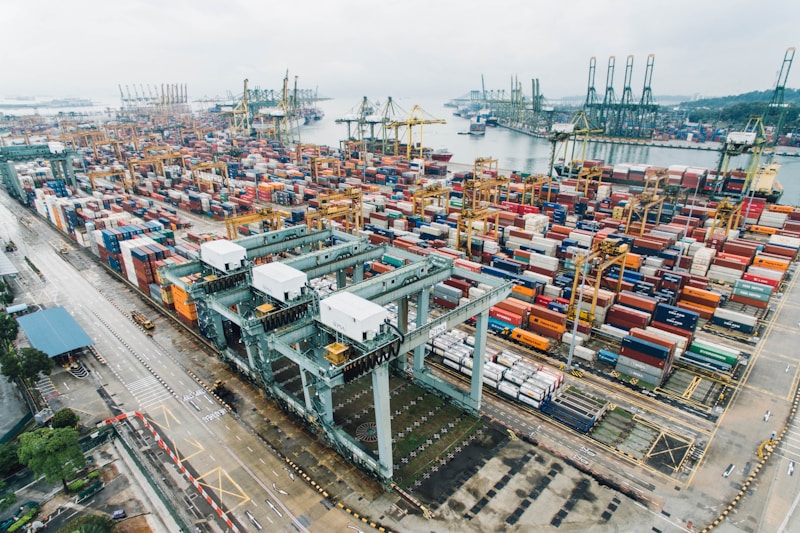
international procurement - SCM NextGen
Photo by jeviniya via Pixabay

Why "Lowest Piece Price" Thinking Destroys Global Sourcing Value

The core challenge in global sourcing is the "Price-Value Gap." Organizations often fall into the trap of selecting a supplier based solely on the Ex-Works (EXW) price. This happens because procurement KPIs are frequently tied to purchase price variance (PPV) rather than the total cost of ownership. When the focus is too narrow, the hidden complexities of international trade are ignored until they hit the profit and loss statement.

When organizations ignore the reality of long lead times, they inevitably face stockouts or overstock situations. A 45-day ocean transit time combined with a 30-day manufacturing lead time means you are making inventory bets nearly three months in advance. If your demand forecasting is off by even 10%, the cost of holding excess inventory or losing sales due to stockouts can easily exceed the savings gained from lower labor costs.

Furthermore, the lack of physical proximity often leads to "Quality Fade." Without regular on-site audits and clear communication, supplier quality can diminish over time as the vendor looks for their own ways to cut costs. A better approach involves a holistic evaluation of the supplier's ecosystem, including their sub-tier vendors, their local political environment, and their financial stability.

❌ Common SCM Mistake✅ Smarter Approach
Optimise cost alone, ignore riskBalance cost, lead time, and supplier reliability together
Treat suppliers as adversariesBuild collaborative supplier partnerships for mutual benefit
Forecast based only on past salesIncorporate market signals, promotions, and external data
Hold excess safety stock "just in case"Use data-driven reorder points to right-size inventory
Measure delivery speed onlyTrack on-time-in-full (OTIF) and customer satisfaction together
Implement technology without process changeRedesign processes first, then select tools that fit

How Total Landed Cost (TLC) Models Change Procurement Decisions

In practice, global sourcing must be governed by a Total Landed Cost (TLC) model. This is the mechanism that allows a procurement officer to compare a supplier in Ohio with one in Ho Chi Minh City on an apples-to-apples basis. TLC moves beyond the invoice price to include every expense required to get the product to your warehouse door.

Understanding this matters operationally because it shifts the conversation from "How much does it cost?" to "How much does it cost to have it here?" For example, a heavy, low-value item might be 40% cheaper to manufacture in India, but the freight and duty costs might make it 10% more expensive than sourcing it from a neighboring country. Using tools like Oracle Cloud Procurement or NetSuite, managers can automate these calculations by integrating real-time freight rates and HTS (Harmonized Tariff Schedule) codes.

Doing this correctly looks like a multi-departmental review. Logistics provides the freight and port handling estimates; Finance provides the cost of capital and FX (Foreign Exchange) risk premiums; and Quality provides the cost of inspections and potential rework. When all these factors are layered into a TLC calculator, the "obvious" choice often changes.

Doing it wrong looks like a procurement manager celebrating a "win" because they negotiated a 5% discount, while the logistics team is simultaneously paying a 15% premium for emergency air freight because the long lead times couldn't handle a minor demand spike. The key takeaway is that global sourcing is a cross-functional financial decision, not just a purchasing one.

Global Sourcing Benchmarks: What Realistic Targets Look Like

Setting realistic expectations is critical for any global sourcing initiative. Industry reports suggest that companies moving from domestic to global sourcing typically aim for a 15% to 30% reduction in unit purchase price. However, after accounting for the TLC factors mentioned earlier, the net savings often settle between 8% and 12%. If your projected savings are less than 5%, the risk of global sourcing usually outweighs the reward.

On-time delivery (OTD) benchmarks also vary significantly. For domestic sourcing, an OTD of 95% or higher is standard. For global sourcing, especially from emerging markets, an OTD of 85% to 90% is often considered "good," with the remaining 10% managed through higher safety stock levels. Research from APICS indicates that for every 30 days added to a lead time, an organization should expect to increase its safety stock by approximately 15% to 20% to maintain the same service level.

Variables that affect these benchmarks include the complexity of the product, the stability of the shipping lanes, and the maturity of the supplier’s local infrastructure. Below-benchmark performance usually indicates systemic issues, such as poor sub-tier supplier management or inadequate port infrastructure in the origin country. One honest warning: many organizations fail to measure "Total Lead Time Variability," focusing only on the average lead time. It is the variability, not the average, that forces you to hold excess inventory.

7 Steps to Implement a Robust Global Sourcing Strategy

Implementing a global sourcing strategy requires a disciplined, phased approach to ensure that cost savings are sustainable and risks are managed.

  1. Define Strategic Requirements: Start by using the SCOR model to map out your supply chain needs. Are you sourcing for cost, responsiveness, or innovation? Not every product is a candidate for global sourcing. High-margin, high-volatility items are often better kept local.
  2. Conduct Country Risk Assessment: Use a PESTLE analysis (Political, Economic, Social, Technological, Legal, Environmental) to evaluate potential regions. Reference the World Bank’s Logistics Performance Index (LPI) to understand the infrastructure quality of the target country.
  3. Identify and Screen Potential Suppliers: Use platforms like Thomasnet, Panjiva, or ImportGenius to identify suppliers with a proven track record of exporting to your region. Look for certifications such as ISO 9001 or SA8000 to ensure quality and social responsibility standards are met.
  4. Develop a Total Landed Cost (TLC) Model: Build a spreadsheet or use a module in your WMS/ERP (like Manhattan Associates or SAP) to calculate the full cost. Include duties, taxes, freight, insurance, and the cost of inventory in transit.
  5. Execute a Rigorous RFI/RFQ Process: Move beyond price in your Request for Quote. Ask about their disaster recovery plans, their sub-tier suppliers, and their capacity to scale. A supplier at 95% capacity is a risk; one at 70% offers room for your growth.
  6. Negotiate and Establish Legal Frameworks: Ensure contracts are governed by international standards like Incoterms 2020. Clearly define the point where risk transfers from the seller to the buyer. Establish payment terms that protect your cash flow, such as Letters of Credit or escrow services for first-time partners.
  7. Implement Performance Monitoring: Once the supplier is onboarded, use a balanced scorecard to track performance. Use KPIs like Quality Yield, On-Time Delivery, and Responsiveness. Tools like Coupa can help automate this supplier relationship management (SRM) process.

Global Supplier Onboarding Checklist

Before finalizing any global sourcing agreement, ensure these operational steps are documented and verified.

ActionTimeline
Verify supplier business license and export permitsWeek 1-2
Conduct PESTLE country risk assessmentWeek 1
Calculate TLC using HTS codes and freight quotesWeek 2
Obtain and test product samples in a certified labWeek 3-4
Review supplier's ISO 9001 or industry-specific certificationsWeek 2
Establish FX hedging strategy with the finance teamWeek 3
Finalize contract using Incoterms 2020 standardsWeek 4-6
🎬 Watch: Global Sourcing Strategies for Competitive Advantage
📌 Prefer watching over reading? This video walks through the key concepts — useful to follow alongside this guide.

How Different Organisation Types Approach This in Practice

The approach to global sourcing varies significantly based on the business model and product lifecycle. A mid-size manufacturer of industrial components might focus on a "Regional Sourcing" model. Instead of sourcing everything from a single low-cost country, they might set up regional hubs—sourcing from Poland for their European plants and from Mexico for their North American operations. This reduces lead times and minimizes the impact of cross-continental logistics disruptions.

In a retail distribution context, global sourcing is often high-volume and seasonal. A large e-commerce retailer might use a "Dual Sourcing" strategy. They source 80% of their base demand from a low-cost global supplier to maximize margins, while keeping a 20% "flex" capacity with a near-shore supplier. This allows them to react quickly to unexpected spikes in demand without waiting for an ocean container to arrive.

For a 3PL provider managing global accounts, the focus is often on "Control Tower" visibility. They leverage platforms like Blue Yonder to provide their clients with real-time data on global shipments. Their role is to mitigate the "Customs Risk" by ensuring all documentation is compliant with local regulations, preventing costly delays at the border that could negate the benefits of global sourcing.

total landed cost - SCM NextGen
Photo by Joshuamiranda via Pixabay
🔭 Industry Insight

The Rise of Multi-Local Sourcing in 2026

As we move through 2026, the trend of 'de-globalization' is being replaced by 'multi-local' sourcing. This is a strategy where companies build redundant supply chains in different trade blocs (e.g., one for RCEP members and one for USMCA members). This shift is driven by the increasing use of trade as a geopolitical tool. According to recent World Economic Forum reports, trade barriers have increased by over 40% in some sectors since 2021. For the SCM professional, this means that the 'optimal' sourcing location will change more frequently. Technology like AI-driven supply chain mapping is becoming essential to simulate these shifts. My advice is to stop looking for the one 'perfect' source and start building a modular supply chain where suppliers can be swapped or scaled based on the current trade climate.

📐 Framework Spotlight

The Kraljic Matrix for Global Sourcing

The Kraljic Matrix, originally developed by Peter Kraljic in 1983, remains the gold standard for strategic sourcing. It classifies items based on two dimensions: Profit Impact and Supply Risk. In a global context, this framework tells you which items deserve the most attention.

  • Strategic Items: High risk, high impact. These require long-term global partnerships and heavy investment in relationship management.
  • Leverage Items: Low risk, high impact. These are ideal for global competitive bidding to drive down costs.
  • Bottleneck Items: High risk, low impact. These require geographic diversification to ensure continuity, even if it costs more.
  • Non-Critical Items: Low risk, low impact. These should be automated or outsourced to a local MRO supplier to reduce administrative burden.
Apply this by mapping your top 50 spend categories today.

5 Global Sourcing Mistakes That Erase Profit Margins

  • Ignoring Currency Volatility: Many organizations sign long-term contracts in USD without considering how a weakening local currency might affect the supplier's ability to buy raw materials. Avoid this by including currency adjustment clauses or using FX hedging.
  • Underestimating Intellectual Property (IP) Theft: Sourcing from regions with weak legal protections can lead to your product being cloned. Avoid this by dividing production across multiple suppliers so no single vendor has the full blueprint.
  • Neglecting Social Compliance: Modern supply chains are under intense scrutiny for labor practices. A single report of forced labor in your global supply chain can destroy your brand value. Use third-party auditors like Sedex or EcoVadis.
  • Failing to Account for "Soft Costs": The time spent by your engineering and procurement teams managing a distant supplier is a real cost. If a global supplier requires ten times the management effort of a local one, those "savings" are often illusory.
  • Over-Reliance on a Single Port: If all your global goods flow through the Port of Los Angeles or the Suez Canal, you have a single point of failure. Diversify your entry points to ensure resilience.

Procurement Tactics That Experienced Category Managers Actually Use

  • ✔️ Index-Based Pricing: Instead of a fixed price, tie your contracts to a commodity index (like the LME for metals). This protects both you and the supplier from wild swings in raw material costs.
  • ✔️ The "Should-Cost" Model: Don't just accept a quote. Use industry data to calculate what the product *should* cost to manufacture. If a supplier's quote is significantly lower, they are likely cutting corners on quality or compliance.
  • ✔️ Regional Buffering: Maintain a small "buffer" of inventory in a local 3PL warehouse. This gives you a 2-4 week safety net if a global shipment is delayed by weather or customs.
  • ✔️ When NOT to Use Global Sourcing: Do not source globally for products in the "Introduction" phase of their lifecycle. The need for rapid design iterations and close engineering collaboration makes the distance of global sourcing a major liability.
Conduct a 'Pre-Mortem' analysis before signing a new global contract. Imagine it is one year from now and the sourcing project has failed—list the reasons why (e.g., port strike, quality failure, FX crash) and build mitigation plans for those specific risks today.
country risk assessment - SCM NextGen
Photo by hamiltonpaviana via Pixabay

Frequently Asked Questions

What is the biggest risk in global sourcing today?

Geopolitical instability and trade protectionism are currently the most significant risks. These factors lead to sudden tariff changes, port closures, or sanctions that can disrupt supply lines overnight, making agility more important than lowest-cost sourcing.

How does Total Landed Cost differ from the purchase price?

Purchase price is only the amount paid to the vendor. Total Landed Cost (TLC) includes freight, insurance, customs duties, taxes, origin and destination handling fees, and the cost of capital for inventory sitting in transit for weeks.

Why should a company use multiple sourcing instead of a single global supplier?

Multi-sourcing, or the 'China Plus One' strategy, reduces dependency on a single geographic region or vendor. This mitigates the impact of localized disasters, political unrest, or supplier-specific insolvency, ensuring continuity of supply.

What role do Free Trade Agreements (FTAs) play in sourcing?

FTAs like USMCA or RCEP eliminate or reduce tariffs between member nations. Leveraging these agreements can provide a 5% to 15% cost advantage over sourcing from non-member countries, significantly impacting the final margin.

How do you manage intellectual property (IP) risks when sourcing globally?

IP risk is managed through rigorous supplier vetting, enforceable non-disclosure agreements (NDAs) in the supplier's local jurisdiction, and 'black box' manufacturing where sensitive components are made in-house and shipped to the global site for final assembly.

What is the impact of lead times on global sourcing inventory?

Longer lead times require higher safety stock levels to buffer against variability. If a supplier in Vietnam has a 60-day lead time compared to a local 7-day lead time, the organization must carry significantly more working capital to maintain service levels.

How can technology improve global procurement visibility?

Platforms like Kinaxis or Blue Yonder provide real-time tracking and 'what-if' scenario modeling. These tools allow procurement managers to see where shipments are and predict the impact of delays on production schedules before they become critical.

When is local sourcing better than global sourcing?

Local sourcing is superior when products have high volatility in demand, high weight-to-value ratios, or require rapid customization. The speed-to-market and lower shipping costs often outweigh the higher unit labor costs found locally.

A Practical Final Note

The most honest insight I can share after years in this field is that global sourcing is never a "set it and forget it" strategy. The world changes too quickly—tariffs are enacted, shipping lanes are disrupted, and new manufacturing hubs emerge. Your sourcing strategy must be as dynamic as the market itself. As Md Faysal Hossain, I encourage you to view your global suppliers not just as vendors, but as extensions of your own operation.

Success in global sourcing comes from mastering the data—specifically your Total Landed Cost and your risk exposure. If you cannot explain why a supplier was chosen using more than just the unit price, your strategy is incomplete. The next step for any professional is to audit your current top-spend categories. Apply the Kraljic Matrix and see where you are over-exposed.

Your immediate action plan: Download your last 12 months of procurement data and calculate the true Total Landed Cost for your top five global items. You might be surprised at what the numbers actually say.

References & Sources

📚References & Sources6 SOURCES
  1. 1ASCM. (2024). APICS CSCP Learning System: Module 2, Supply Chain Strategy. Association for Supply Chain Management.
  2. 2Gartner. (2023, November 14). Top Strategic Technology Trends in Supply Chain for 2024. Retrieved from https://www.gartner.com/en/supply-chain
  3. 3McKinsey & Company. (2022). Taking the pulse of supply chain resilience. McKinsey Operations Practice.
  4. 4CIPS. (2025). Global Sourcing Knowledge Paper. Chartered Institute of Procurement & Supply.
  5. 5World Economic Forum. (2024). The Global Risks Report 2024. WEF Publications.
  6. 6Kraljic, P. (1983). Purchasing Must Become Supply Management. Harvard Business Review.

ℹ️References reflect publicly available industry research and reporting. Verify specific figures or report titles against the original publisher before citing elsewhere.

🤝

Procurement Pros — Share Your Insights!

Which sourcing or supplier-management approach has actually worked for you? Drop your experience below — it could help a procurement student or new buyer avoid a costly mistake.

Md Faysal Hossain
✍️ Md Faysal Hossain
SCM NextGen · Supply Chain Experts
SCM NextGen is written by supply chain management professionals and educators with real-world experience in logistics, procurement, warehousing, and operations. Our goal is to make SCM concepts practical — whether you are a student preparing for a certification, a buyer managing suppliers, or an operations manager looking for smarter strategies.
⚠️ DisclaimerThe information in this post is intended for educational purposes in the field of supply chain management. While we strive for accuracy, supply chain practices, regulations, and technologies evolve rapidly. Always verify specific figures, standards, or compliance requirements with authoritative industry sources such as APICS, CIPS, or your organisation's legal and operations advisors. SCM NextGen does not accept liability for decisions made based on this content.

Popular Posts