
Building Resilient Supply Chains: A Professional Guide to Risk Mitigation
📅 Updated July 2026 · ✍️ Md Faysal Hossain
📑 Table of Contents
- Why the Efficiency Bias Creates Hidden Supply Chain Vulnerabilities
- How the Risk Assessment Matrix Drives Operational Decisions
- Supply Chain Resilience Benchmarks: Measuring Recovery Time
- 6 Steps to Formalizing Your Risk Management Framework
- Your Supplier Risk Audit Checklist
- How Different Organisation Types Approach Risk in Practice
- 5 Risk Management Errors That Leave Supply Chains Vulnerable
- Risk Mitigation Tactics for Category Managers
- Frequently Asked Questions
- References & Sources
Many managers believe that supply chain risk management is about predicting the future. It isn't. It is about building systems that can absorb the impact of the unpredictable. I have seen countless organisations spend thousands on predictive analytics only to fail because they lacked the basic flexibility to pivot when a tier-2 supplier went bankrupt.
The most resilient supply chains in the world are not the cheapest or the fastest. They are the most visible. Visibility, it turns out, is the one metric that predicts everything else. If you cannot see the bottleneck, you cannot fix it. If you cannot identify the single point of failure in your procurement map, you are not managing risk; you are simply hoping for the best.
As an SCM professional, I focus on grounded, actionable strategies. We must move beyond the idea that risk is an unfortunate accident. In a globalized economy, disruption is a mathematical certainty. The question is not if it will happen, but how prepared your team is to execute a recovery plan. This guide covers the six categories of risk, the assessment matrix, and the specific mitigation strategies used by industry leaders.
Why the Efficiency Bias Creates Hidden Supply Chain Vulnerabilities
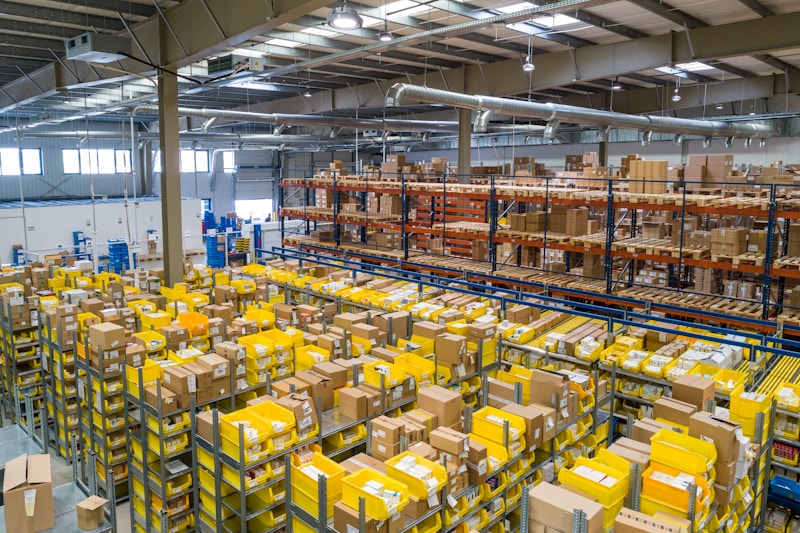
For decades, the mantra in supply chain management was 'lean.' We focused on removing every ounce of 'waste,' which usually meant reducing inventory levels and consolidating the supplier base to maximize volume discounts. While this approach improves short-term margins, it creates a brittle network. When the focus is purely on efficiency, there is no buffer for error.
The forecasting gap is where most companies fail. They build plans based on a 'steady state' environment that no longer exists. According to McKinsey Operations research, companies can expect a disruption lasting a month or longer every 3.7 years. If your supply chain is optimized only for efficiency, a one-month stop in production can be catastrophic.
Organisations fall into this trap because efficiency is easy to measure on a balance sheet. Resilience is harder to quantify until it is missing. A better approach involves 'stress-testing' the supply chain. Instead of asking how we can make it cheaper, we must ask what happens if our primary port is closed for two weeks. Transitioning from a 'Just-in-Time' to a 'Just-in-Case' mindset—even partially—is the first step toward true resilience.
| ❌ Common SCM Mistake | ✅ Smarter Approach |
|---|---|
| Optimise cost alone, ignore risk | Balance cost, lead time, and supplier reliability together |
| Treat suppliers as adversaries | Build collaborative supplier partnerships for mutual benefit |
| Forecast based only on past sales | Incorporate market signals, promotions, and external data |
| Hold excess safety stock "just in case" | Use data-driven reorder points to right-size inventory |
| Measure delivery speed only | Track on-time-in-full (OTIF) and customer satisfaction together |
| Implement technology without process change | Redesign processes first, then select tools that fit |
How the Risk Assessment Matrix Drives Operational Decisions
To manage risk, you must first categorize it. I use six primary categories to ensure nothing is overlooked. Operational risks involve internal process failures or equipment breakdowns. Financial risks relate to supplier insolvency or currency fluctuations. Geopolitical risks cover trade wars and border closures. Environmental risks include natural disasters. Cybersecurity risks are increasingly common, targeting data integrity. Finally, reputational risks involve ethical lapses in the supply chain.
Once identified, we apply a Risk Assessment Matrix. This tool plots the likelihood of an event against its potential impact. A high-likelihood, high-impact event (like a recurring seasonal hurricane in a manufacturing hub) requires an immediate 'Avoid' or 'Reduce' strategy. A low-likelihood, low-impact event might be 'Accepted' as part of the cost of doing business.
Understanding this mechanism matters because it prevents 'risk fatigue.' You cannot mitigate every possible threat. Doing it correctly looks like a procurement officer using Coupa or SAP Ariba to monitor the credit scores of critical vendors. Doing it wrong looks like a company treating a minor shipping delay with the same urgency as a total factory shutdown. One key takeaway: focus your resources on the top-right quadrant of your matrix.
Supply Chain Resilience Benchmarks: Measuring Recovery Time
Setting honest benchmarks is the only way to measure if your risk strategy is actually working. Industry reports suggest that the 'Time to Recover' (TTR) is the most critical metric. For a Tier-1 manufacturer, a TTR of less than 48 hours for localized disruptions is considered world-class. If your recovery time exceeds a week for a standard component failure, your resilience is below industry standard.
Variables affecting these benchmarks include your geographic spread and the complexity of your BOM (Bill of Materials). A company with a deep, multi-tier supply chain will naturally have a longer TTR than a local distributor. Research from Gartner indicates that only 21% of supply chain leaders believe they have a highly resilient network today.
One honest warning: do not confuse 'safety stock' with 'resilience.' Many organisations find that they have high inventory levels of the wrong items. True resilience is about the agility of your logistics and the flexibility of your contracts, not just the volume of parts in a warehouse. Below-benchmark performance usually indicates a lack of multi-sourcing or poor communication with tier-2 and tier-3 suppliers.
6 Steps to Formalizing Your Risk Management Framework
Implementing a risk framework requires a disciplined, step-by-step approach. It is not a one-off project but a permanent change in how you view operations.
- Map the End-to-End Supply Chain: You cannot manage what you cannot see. Use tools like Kinaxis or Manhattan Associates to map every node from raw material to the final customer. A common pitfall is stopping at your direct suppliers and ignoring the sub-tier vendors who provide their components.
- Conduct a Vulnerability Audit: Identify the 'single points of failure.' If a specific resin is only produced by one factory in the world, that is a critical vulnerability. Operationally, this step identifies where you need to begin looking for alternative sources or substitute materials.
- Quantify Risk Levels: Use the likelihood x impact formula. Assign numerical values (1-5) to each. This provides a data-driven way to present risk to the C-suite, moving the conversation from 'gut feelings' to a prioritized action plan.
- Develop Mitigation Playbooks: For every high-priority risk, write a playbook. If 'Supplier A' fails, the playbook should dictate exactly which 'Supplier B' to contact, what the pre-negotiated pricing is, and how to shift the logistics route.
- Implement Real-Time Monitoring: Use IoT and cloud-based platforms to get alerts on port congestion, weather patterns, or geopolitical unrest. Real-world platforms like Everstream Analytics provide these feeds directly into your ERP.
- Stress-Test and Update: Conduct 'tabletop exercises' where your team simulates a disruption. This reveals gaps in the playbook. A realistic expectation is that your first simulation will be messy; the goal is to find those messes before a real crisis does.
Your Supplier Risk Audit Checklist
Regularly auditing your supply base is the most effective way to prevent financial and reputational risk. Use this checklist during your quarterly business reviews (QBRs) with key partners.
| ✅ | Action | Timeline |
|---|---|---|
| ⬜ | Review supplier financial health via D&B or CreditSafe | Quarterly |
| ⬜ | Verify ISO 27001 or SOC2 compliance for IT vendors | Annually |
| ⬜ | Map tier-2 and tier-3 locations for key components | Bi-Annually |
| ⬜ | Audit supplier adherence to ESG and labor standards | Annually |
| ⬜ | Test backup communication channels with 3PL providers | Monthly |
| ⬜ | Check for updated trade compliance and tariff changes | Ongoing |
| ⬜ | Validate supplier Business Continuity Plans (BCP) | Annually |
How Different Organisation Types Approach Risk in Practice
In a retail distribution context, risk management often focuses on inventory placement. A large retailer might use a 'hub and spoke' model, ensuring that if one regional DC (Distribution Center) is offline due to a localized event, another can fulfill orders with only a slight increase in lead time. They prioritize agility over the absolute lowest transport cost.
A mid-size manufacturer might take a different approach. For them, risk is often concentrated in specialized machinery or raw materials. They may invest in 'dual-tooling'—having sets of molds or tools at two different suppliers. This is expensive upfront but prevents a total production halt if one supplier faces a fire or strike. They focus on 'capacity resilience.'
For a 3PL provider, the primary risk is often labor and fuel. They manage this through dynamic routing software and diversified carrier networks. Instead of relying on their own fleet, they maintain 'overflow' contracts with other carriers. This allows them to scale or pivot based on demand spikes or regional labor shortages without failing their client SLAs.

The Bow-tie Model for Supply Chain Risk
The Bow-tie model is a visual framework used to analyze and communicate how risks are managed. On the left side of the 'knot' (the event), you list the potential causes or threats. On the right side, you list the potential consequences. Between the threats and the event are 'preventive barriers.' Between the event and the consequences are 'recovery barriers.'To apply this in SCM:
- Identify a critical event (e.g., 'Primary Port Closure').
- List threats (e.g., labor strike, natural disaster).
- Identify preventive barriers (e.g., monitoring labor negotiations, diversifying ports).
- Identify recovery barriers (e.g., air-freight contingency, safety stock).
Risk Management & Visibility Platforms
- Resilinc: Best for enterprise-level multi-tier mapping. It provides deep visibility into tier-2 and tier-3 suppliers. Limitation: Requires significant cooperation from your tier-1 suppliers to provide data.
- Everstream Analytics: Best for predictive risk and real-time weather/geopolitical alerts. It uses AI to predict how events will impact specific lanes. Limitation: Can be expensive for SMEs.
- SAP IBP (Integrated Business Planning): Best for mid-to-large companies already in the SAP ecosystem. It integrates risk into the S&OP process. Limitation: Steep learning curve and high implementation cost.
5 Risk Management Errors That Leave Supply Chains Vulnerable
❌ Treating Risk as a One-Time Activity: Many teams create a risk register during a yearly planning session and never look at it again. Risk is dynamic; a supplier that was healthy in January might be struggling by June. Avoid this by making risk a standing item in weekly S&OP meetings.
❌ Ignoring Small Supplier Risk: We often focus on our million-dollar vendors. However, a $5 component from a tiny supplier can stop a $50,000 product from shipping. You must identify 'critical' suppliers based on their impact on the final product, not just their spend level.
❌ Over-Reliance on Historical Data: Just because a route hasn't been disrupted in ten years doesn't mean it is safe. Climate change and shifting geopolitical alliances mean that the past is a poor predictor of future supply chain stability.
❌ Lack of Internal Silo Communication: Procurement might know a supplier is struggling, but if they don't tell Logistics or Production, the company cannot prepare. Risk management must be a cross-functional discipline involving Finance, Legal, and Operations.
❌ Confusing Software with Strategy: Buying a license for a risk-tracking tool does not mean you have a strategy. The software provides the data, but your team must have the authority and the playbooks to act on that data when an alert triggers.
Procurement Tactics That Experienced Category Managers Actually Use
✔️ The 'China Plus One' Strategy: Even if China remains your primary source for cost reasons, maintain a secondary, active source in another region like Vietnam, Mexico, or India. This keeps the secondary supply chain 'warm' and ready to scale if needed.
✔️ Include 'Right to Audit' in Every Contract: Never sign a critical supply agreement without the legal right to audit their financial health and their own sub-tier risk plans. If a supplier refuses this, it is a major red flag for their transparency.
✔️ Pre-Approved Substitute Materials: Work with Engineering to pre-approve alternative materials for critical parts. If the primary material becomes unavailable, you can switch production immediately without waiting months for quality testing and re-certification.
✔️ Index-Based Pricing: For volatile commodities, use index-based pricing to share the risk with the supplier. When not to use it: Avoid this in a rapidly falling market where fixed-price contracts would yield higher savings, or when you have no way to verify the index accuracy.

Frequently Asked Questions
What is the difference between supply chain resilience and robustness?▼
Robustness refers to the ability of a system to resist change or disruption without losing function. Resilience is the ability of the supply chain to recover quickly and return to its original or an improved state after a disruption has occurred.
How often should a risk assessment matrix be updated?▼
In my experience, a risk register should be a living document reviewed quarterly. However, major geopolitical shifts or changes in supplier financial health should trigger an immediate out-of-cycle review.
What are the primary categories of supply chain risk?▼
The six core categories are operational, financial, geopolitical, environmental, cybersecurity, and reputational risks. Each requires a distinct mitigation approach and different internal stakeholders for management.
Can all supply chain risks be eliminated?▼
No. Risk elimination is often cost-prohibitive and practically impossible. The goal of risk management is to identify which risks to avoid, which to mitigate, and which are acceptable costs of doing business.
What is the role of multi-sourcing in risk mitigation?▼
Multi-sourcing reduces dependency on a single supplier or geographic region. It provides redundancy, allowing a company to shift volume if one source fails, though it often increases procurement complexity and reduces volume discounts.
How does cybersecurity impact logistics and warehousing?▼
Modern logistics relies on WMS and TMS platforms. A cyberattack can halt physical operations by locking down inventory data, preventing shipments, or compromising sensitive customer information, leading to total operational paralysis.
What is a 'Black Swan' event in supply chain management?▼
A Black Swan is an unpredictable event that has a massive impact, such as a global pandemic or a major canal blockage. Resilience strategies focus on building flexibility to handle these events, even if they cannot be specifically predicted.
How do I justify the cost of risk management to senior leadership?▼
Frame the cost as an insurance policy for revenue. Use historical data to show the cost of past disruptions versus the cost of proactive mitigation, focusing on the Total Cost of Ownership (TCO) and brand protection.
The Part Most Guides Skip
The hardest part of supply chain risk management isn't the data—it's the culture. In many organisations, the person who identifies a risk is seen as a 'pessimist' or someone creating extra work. To build a truly resilient supply chain, you must reward transparency. You want your team to tell you about a potential supplier issue when it's a 'yellow flag,' not when the factory has already stopped production.
Resilience is a competitive advantage. When your competitors are paralyzed by a disruption, your ability to continue shipping products—even at a slightly higher cost—allows you to capture market share and build customer loyalty that lasts for years. This is why risk management is a strategic function, not just an administrative one.
Your next step is to take your current supplier list and identify the top five vendors by 'impact of failure' rather than 'spend.' Start your first risk assessment there. Build one solid contingency plan this month. Then build another. Resilience is built one link at a time.
References & Sources
- 1Association for Supply Chain Management. (2023). Supply Chain Risk Management Research Report. Retrieved from https://www.ascm.org
- 2Christopher, M. (2016). Logistics & Supply Chain Management: Creating Value-Adding Networks. Pearson Education.
- 3Gartner. (2022, May 19). 6 Strategies for a More Resilient Supply Chain. Retrieved from https://www.gartner.com
- 4McKinsey & Company. (2020, August 6). Risk, resilience, and rebalancing in global value chains. Retrieved from https://www.mckinsey.com
- 5World Economic Forum. (2024). The Global Risks Report 2024. Retrieved from https://www.weforum.org
- 6CIPS. (2021). Risk Management in Supply Chains. Chartered Institute of Procurement & Supply.
References reflect publicly available industry research and reporting. Verify specific figures or report titles against the original publisher before citing elsewhere.
What's Your Take on Supply Chain Risk Management: Mitigation Strategies and Resilience?
Have you dealt with this in your own supply chain work or studies? Share your experience, questions, or pushback in the comments — this is where the real learning happens.


No comments:
Post a Comment